Welcome to the Allen Park Public Seed Library
What is a Seed Library?
- A collection of fruit, vegetable, or flower seeds that are shared & circulated among the community.
- Seed selection varies by season & availability.
- Seeds are always FREE!
How to Use the Seed Library?
- Choose available seeds based on light & location of growing area.
- Choose up to 5 seed packets per family.
- Choose seeds that you would enjoy growing & eating.
- Each seed packet contains enough seeds for 1-5 plants.
- Follow the planting & growing instructions on seed packets.
- More in-depth care instructions for each seed variety can be found on our website.
- Save your seeds for future growing & if possible, donate seeds back to the Allen Park Seed Library for future community enjoyment.
Why Save Seeds?
- You connect to nature & your food.
- You save money on future seeds.
- You adapt varieties to your local climate.
- Saved seeds make great gifts!
- You make connections with your local gardening community.
How to Save Seeds for Donation?
Return seeds to the Allen Park Library Seed Library!
Refer to our website for more specific care instructions for each seed variety.
Take seeds from planted & matured plants.
Make sure seeds are completely dry. Wet seeds can mold.
Place dry seeds in provided envelopes with type of seed, name of plant, & date saved & donated.

Our Current Seeds Table of Contents
- Flowers
- Fruits
- Herbs
- Vegetables
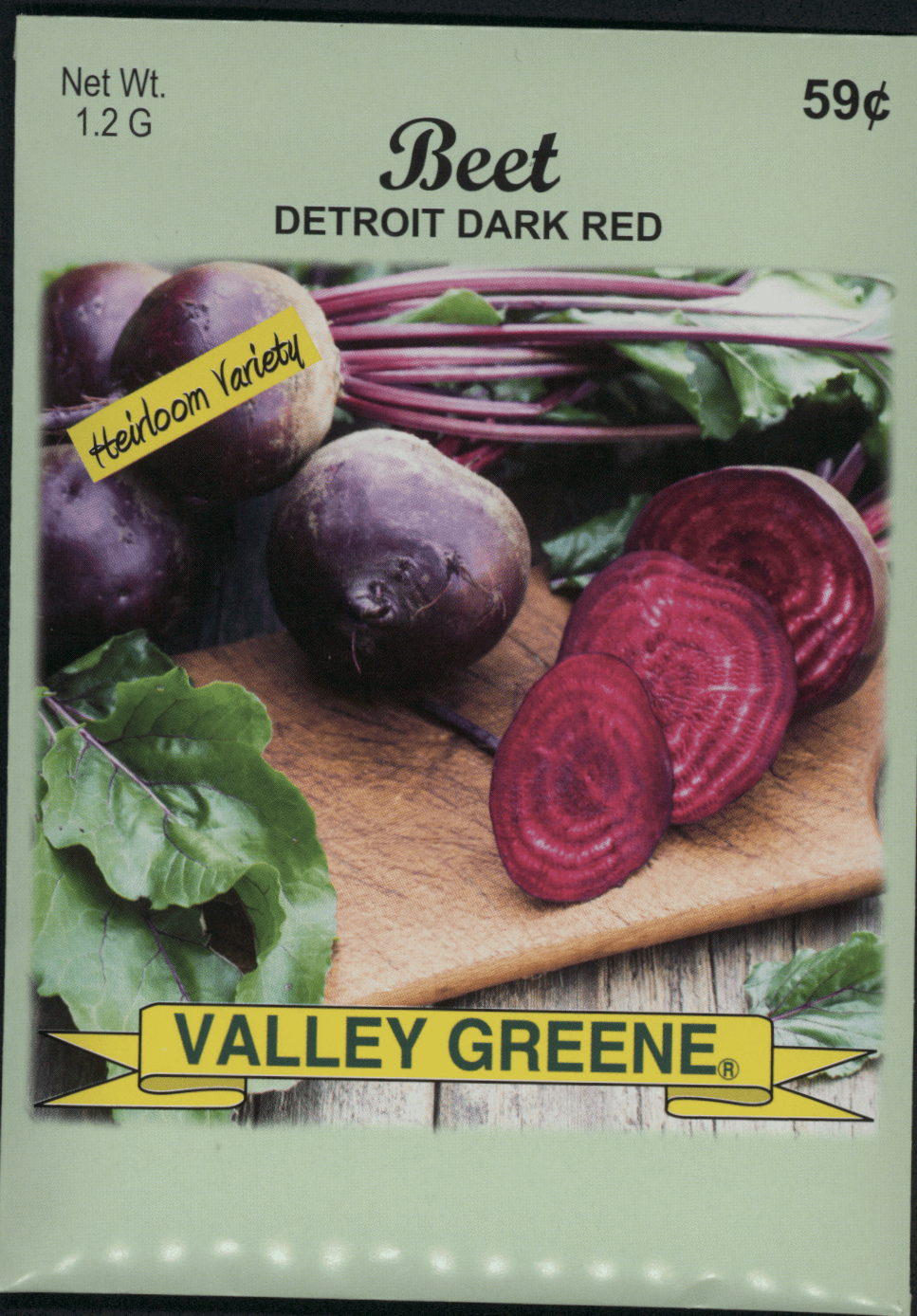
- Beet – Detroit Dark Red
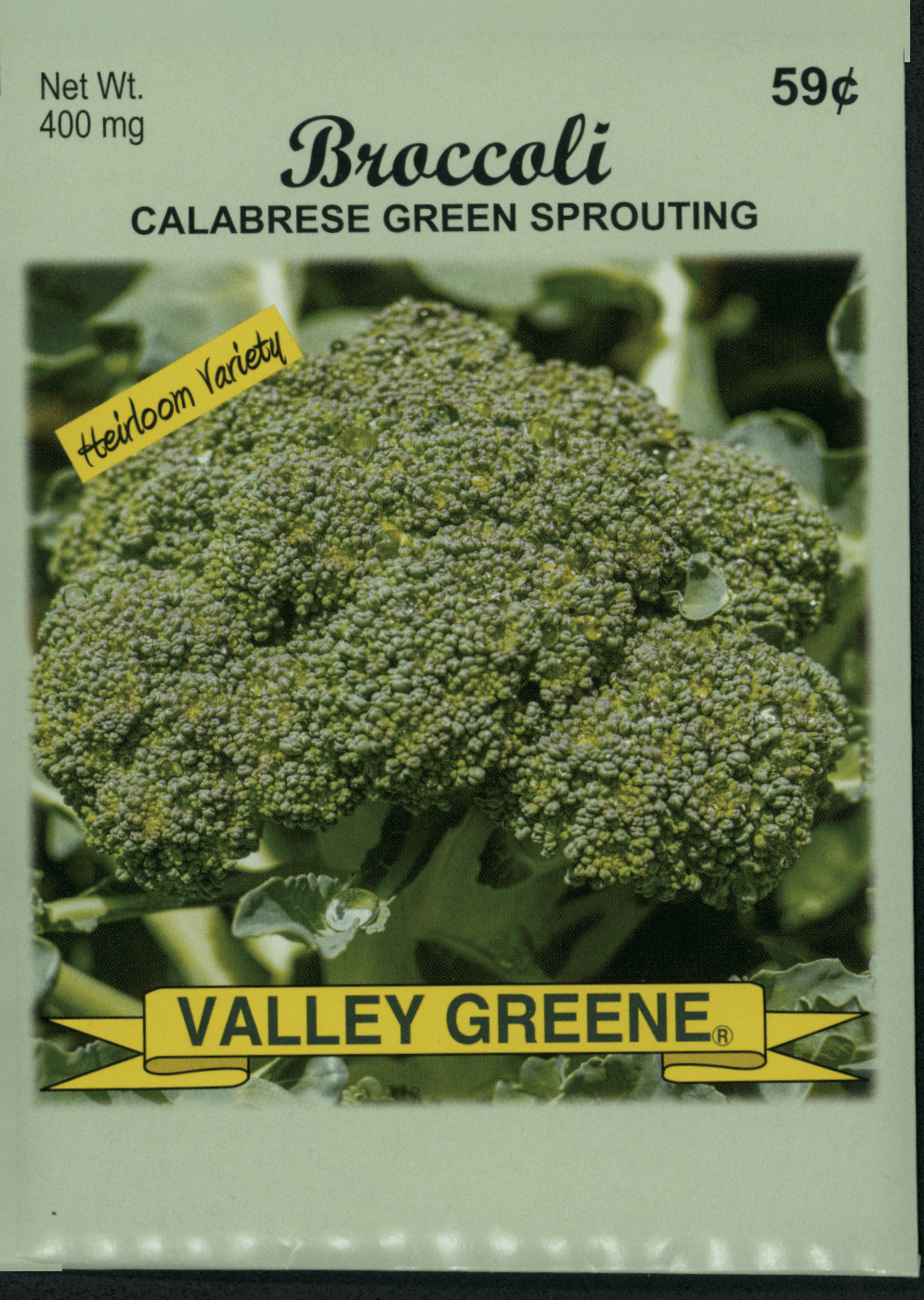
- Broccoli – Calabrese Green Spouting
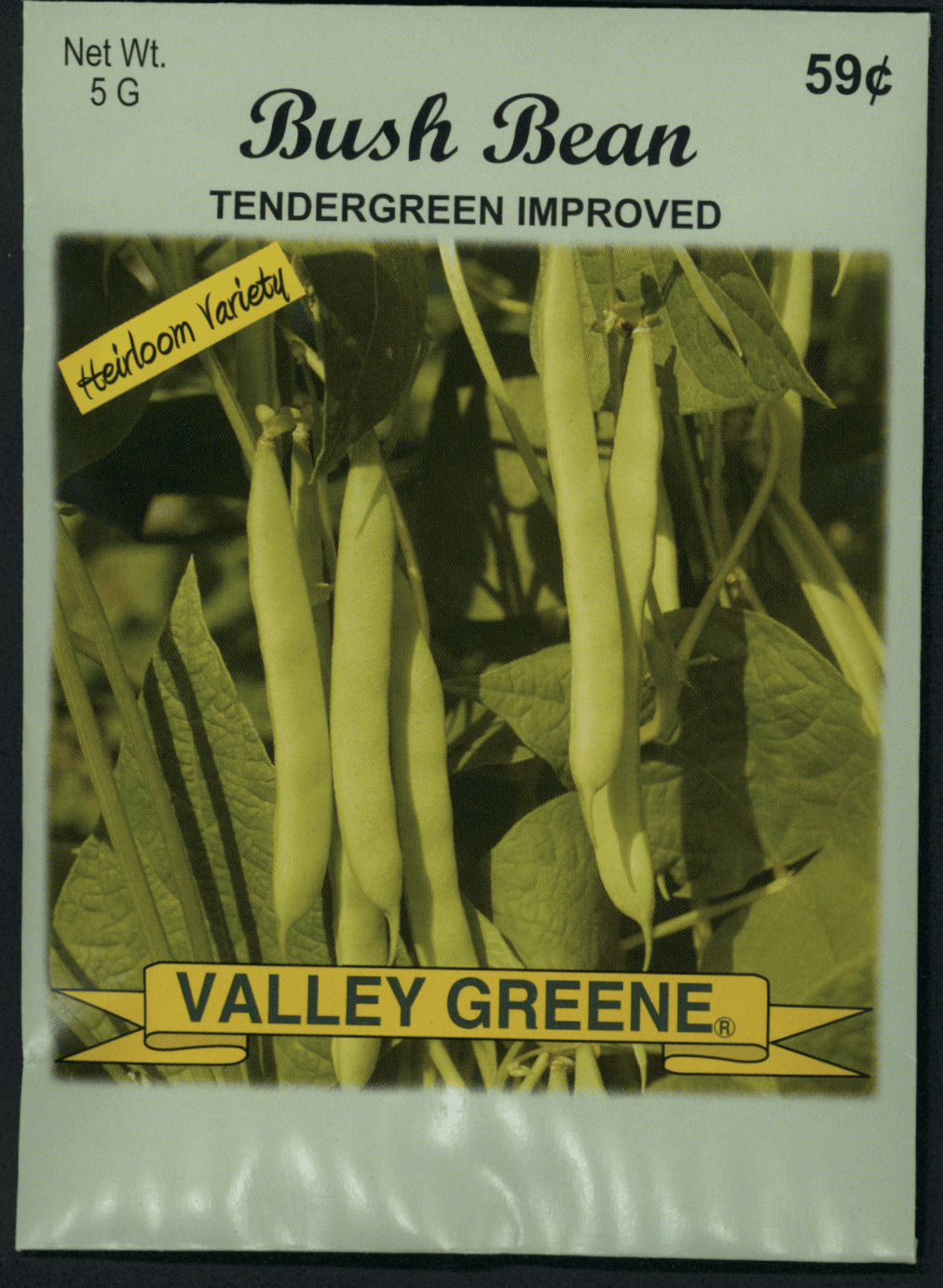
- Bush Bean – Tendergreen Improved
- Cabbage – Golden Acre
- Carrot – Nantes Coreless
- Collards – Champion
- Cucumber – Chicago Pickling
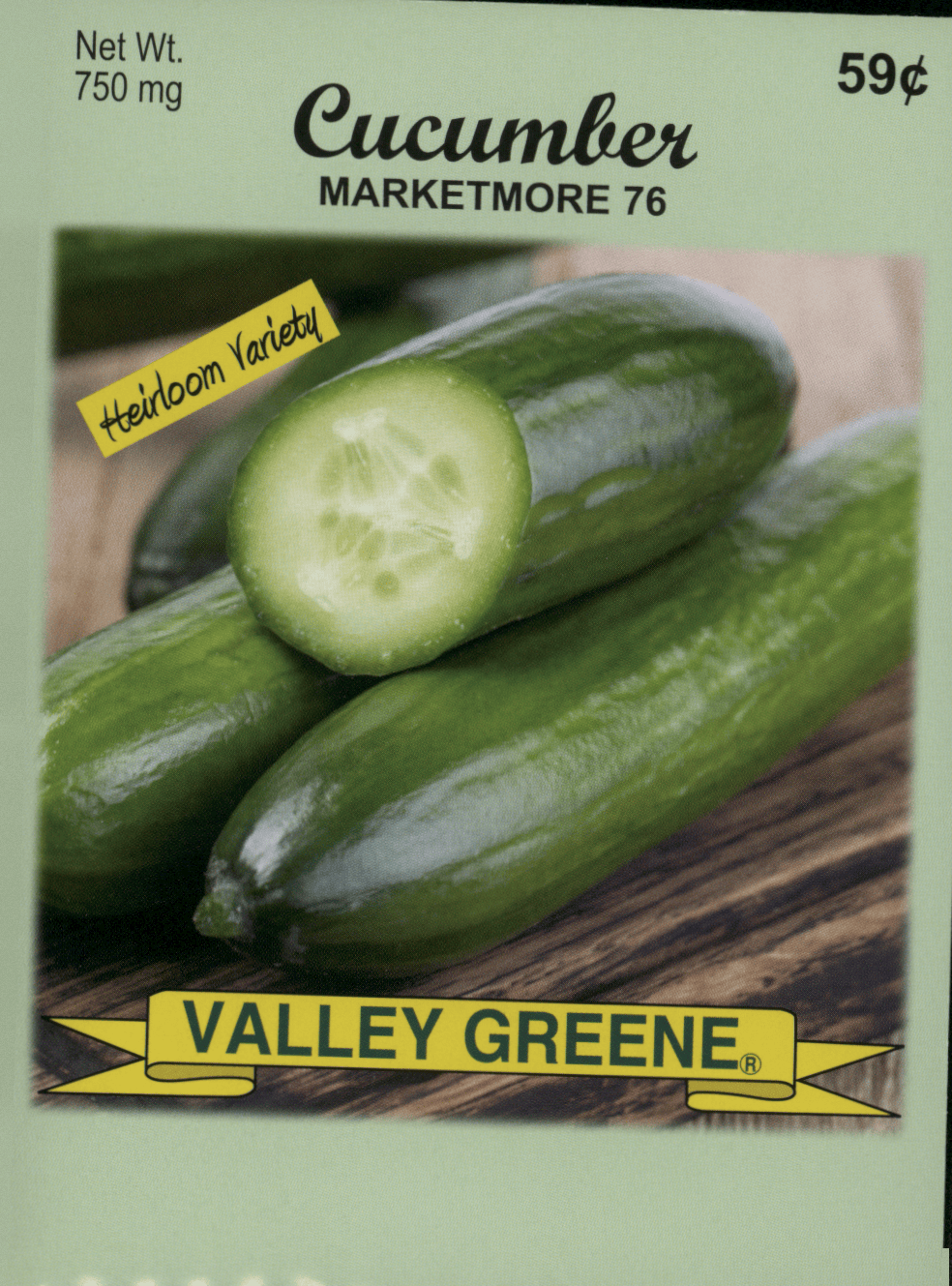
- Cucumber – Marketmore 76
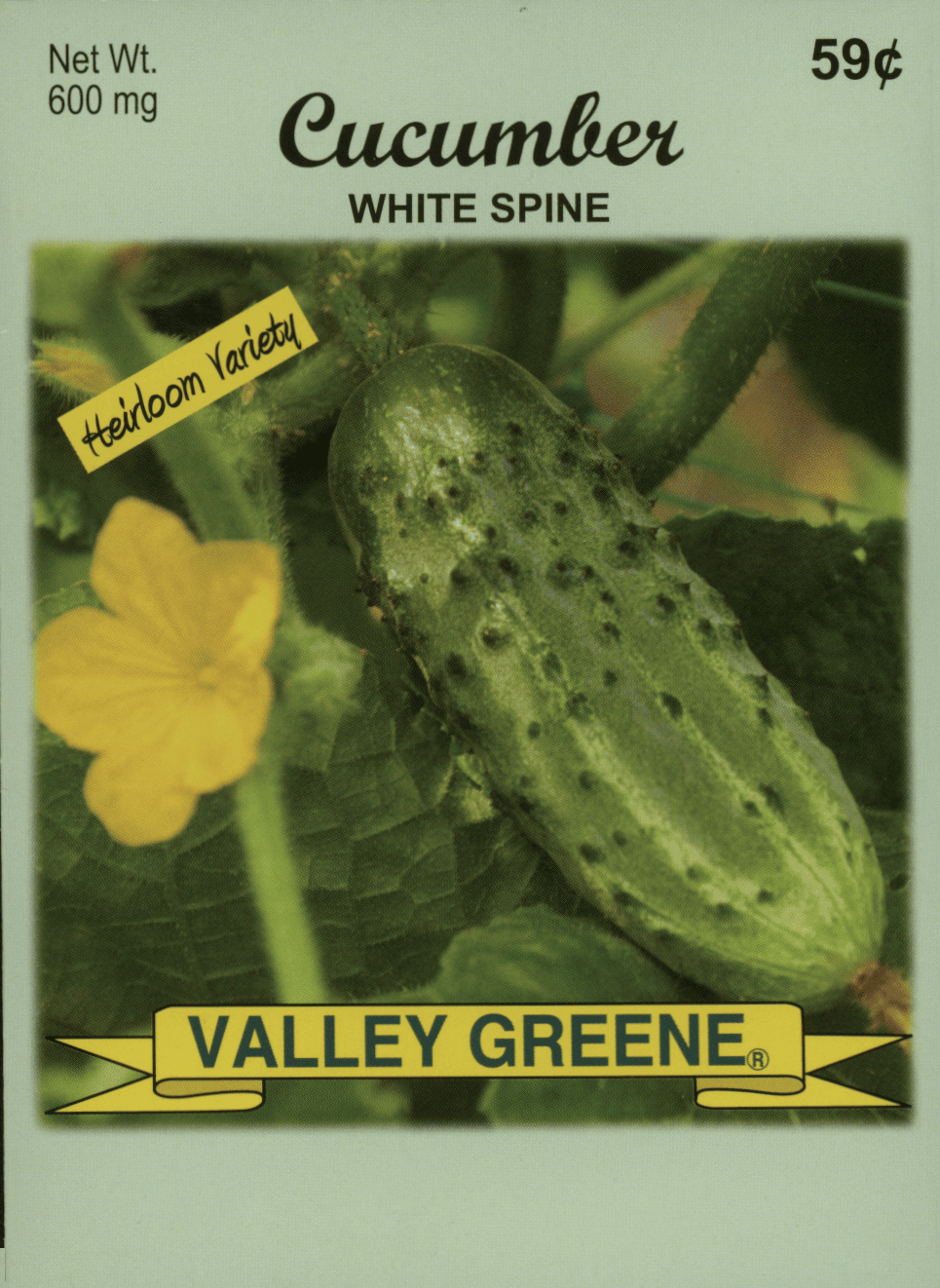
- Cucumber – White Spine
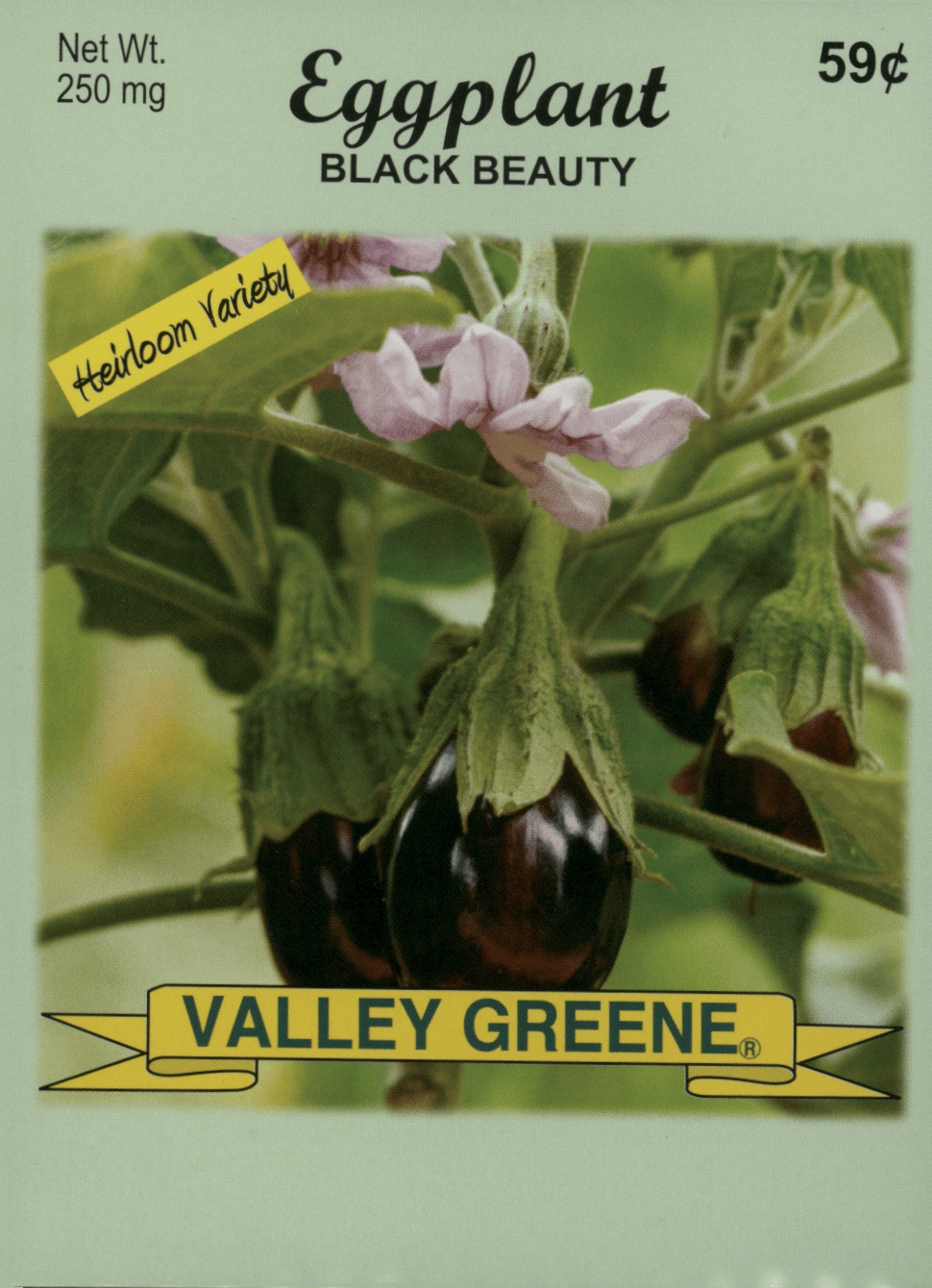
- Eggplant – Black Beauty
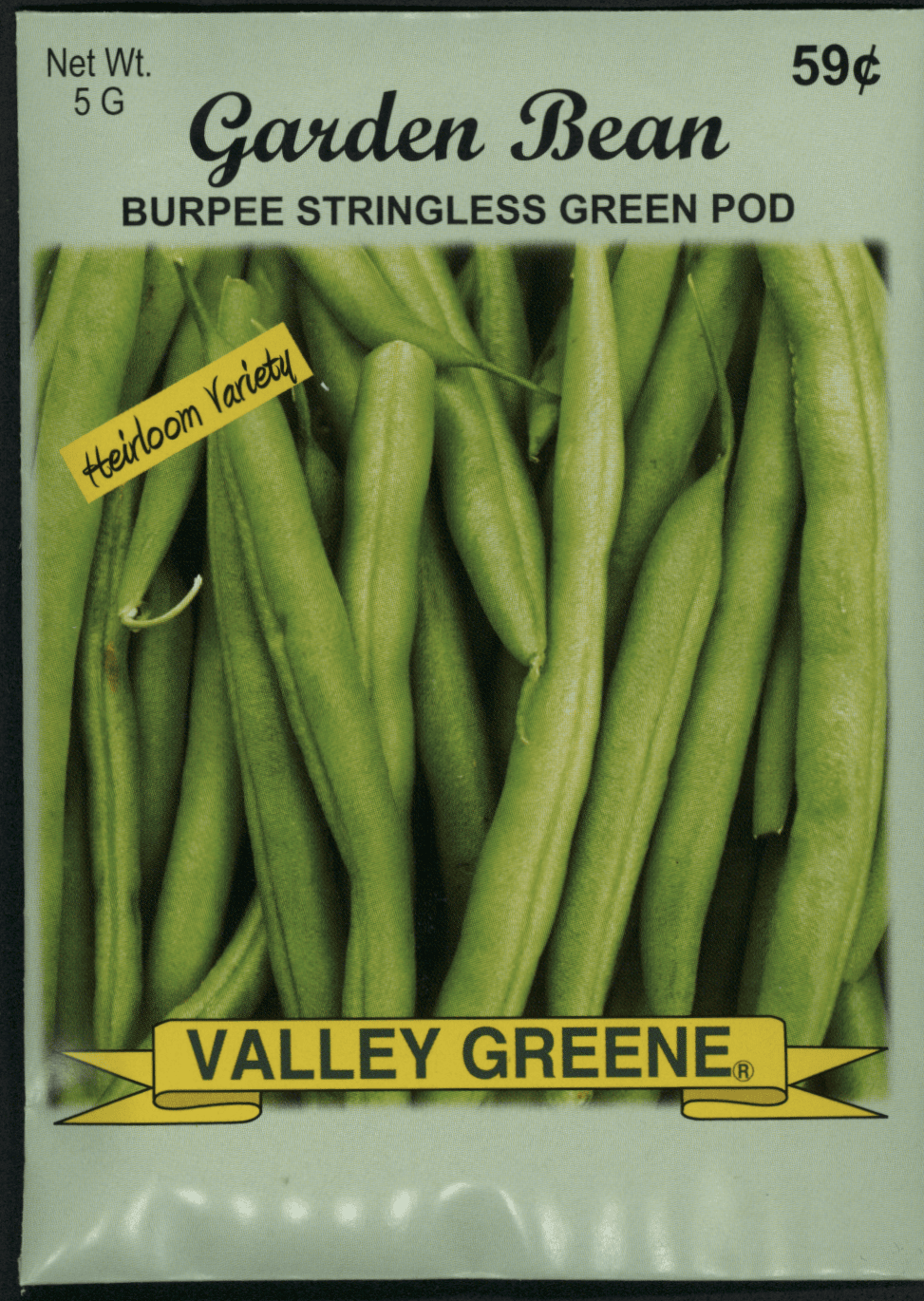
- Garden Bean – Burpee Stringless Green Pod
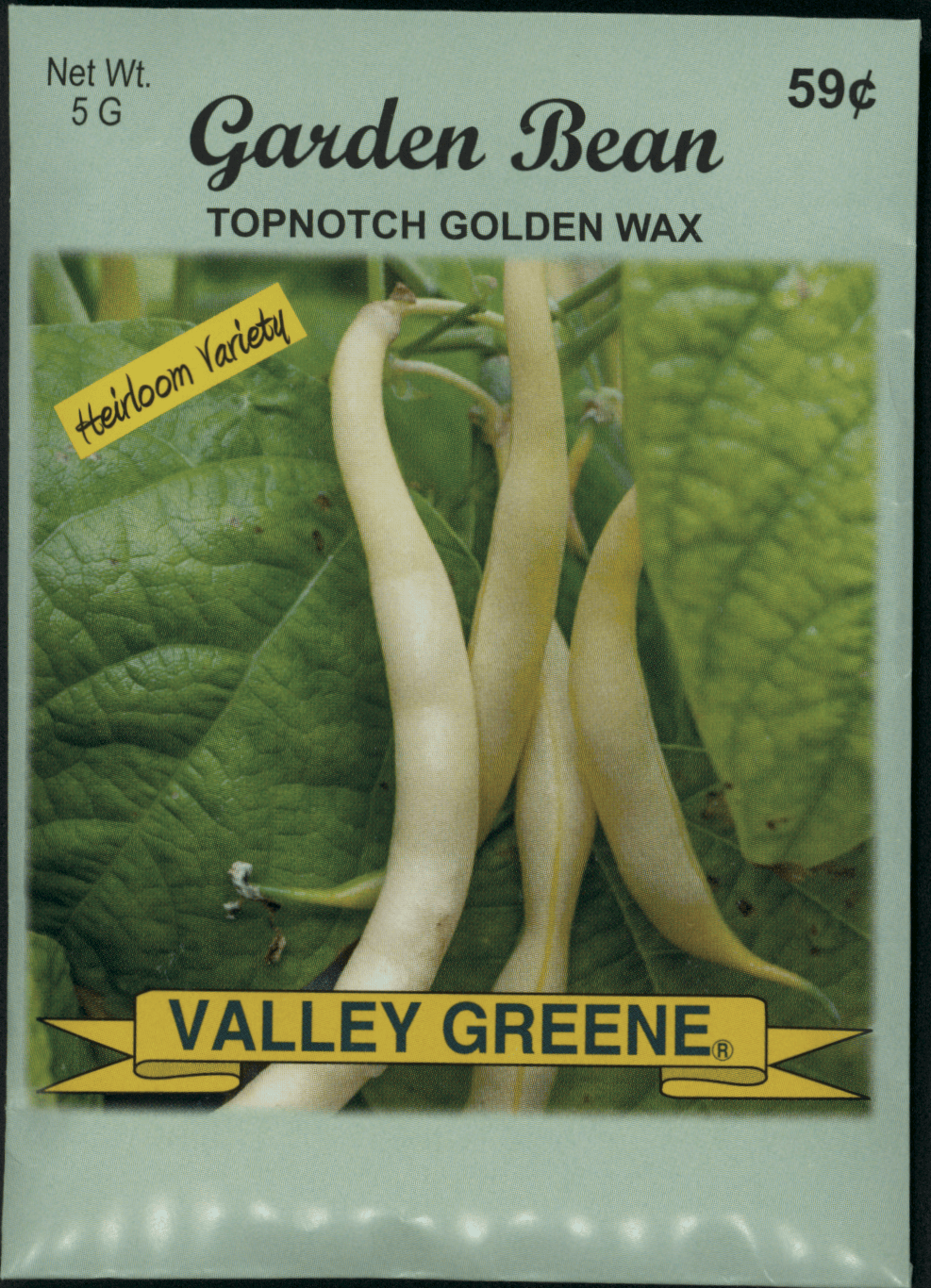
- Garden Bean – Topnotch Golden Wax
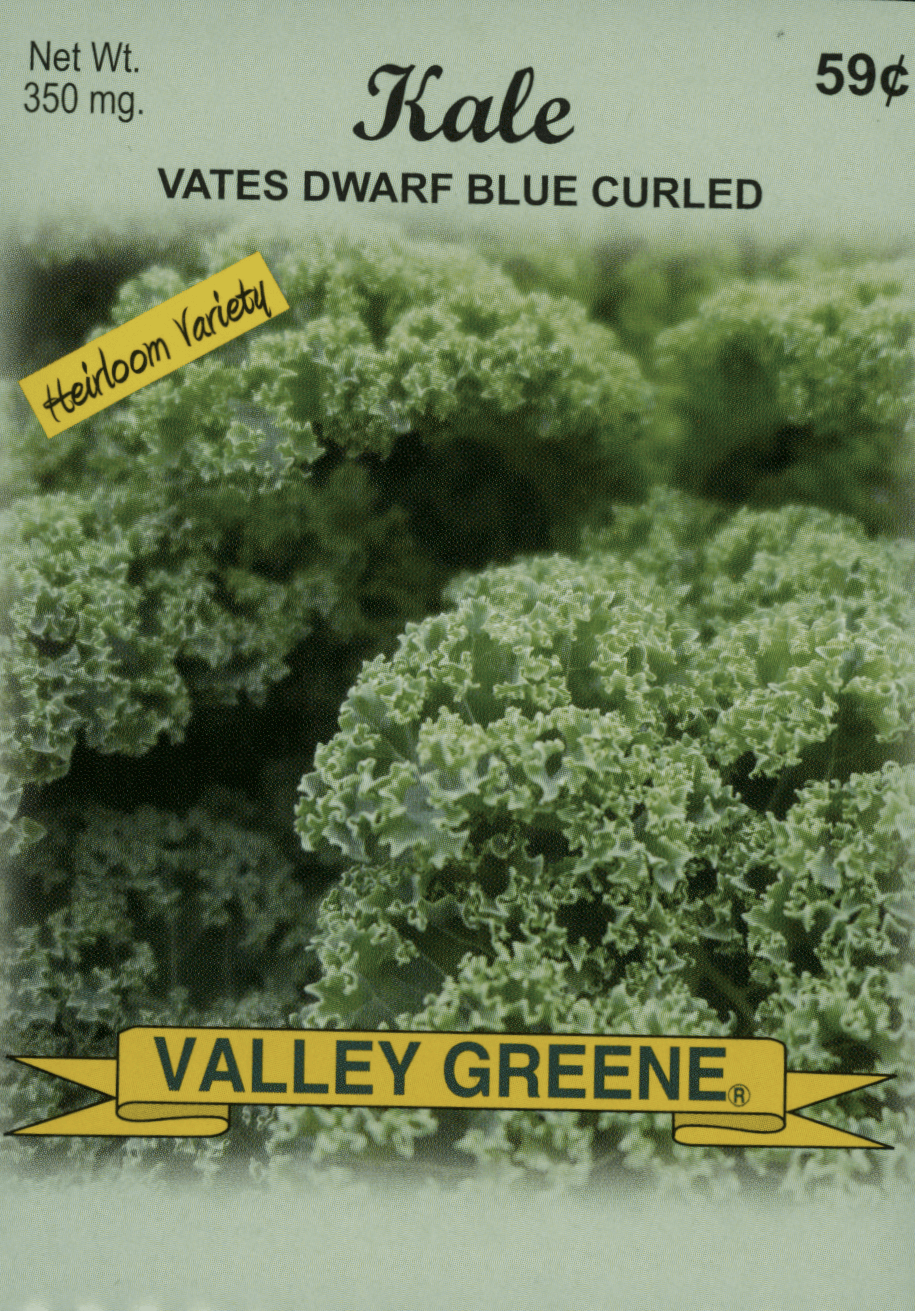
- Kale – Vates Dwarf Blue Curled
- Lettuce – Black Seeded Simpson
- Lettuce – Buttercrunch
- Lettuce – Parris Island Cos
- Peas – Little Marvel
- Pepper – Big Jim Chili
- Pepper – Keystone Resistant Giant
- Pumpkin – Jack O’ Lantern
- Radish – Champion
- Radish – China Rose Winter Radish
- Radish – Early Scarlet Globe
- Spinach – Bloomsdale Longstanding
- Squash – Early Prolific Straightneck
- Squash – Table Queen
- Squash – Zucchini Black Beauty
- Sweet Corn – Country Gentleman
- Sweet Corn – Golden Bantam
- Sweet Corn – Stowell’s Evergreen
- Turnip – Purple Top White Globe
- Turnip – Seven Top
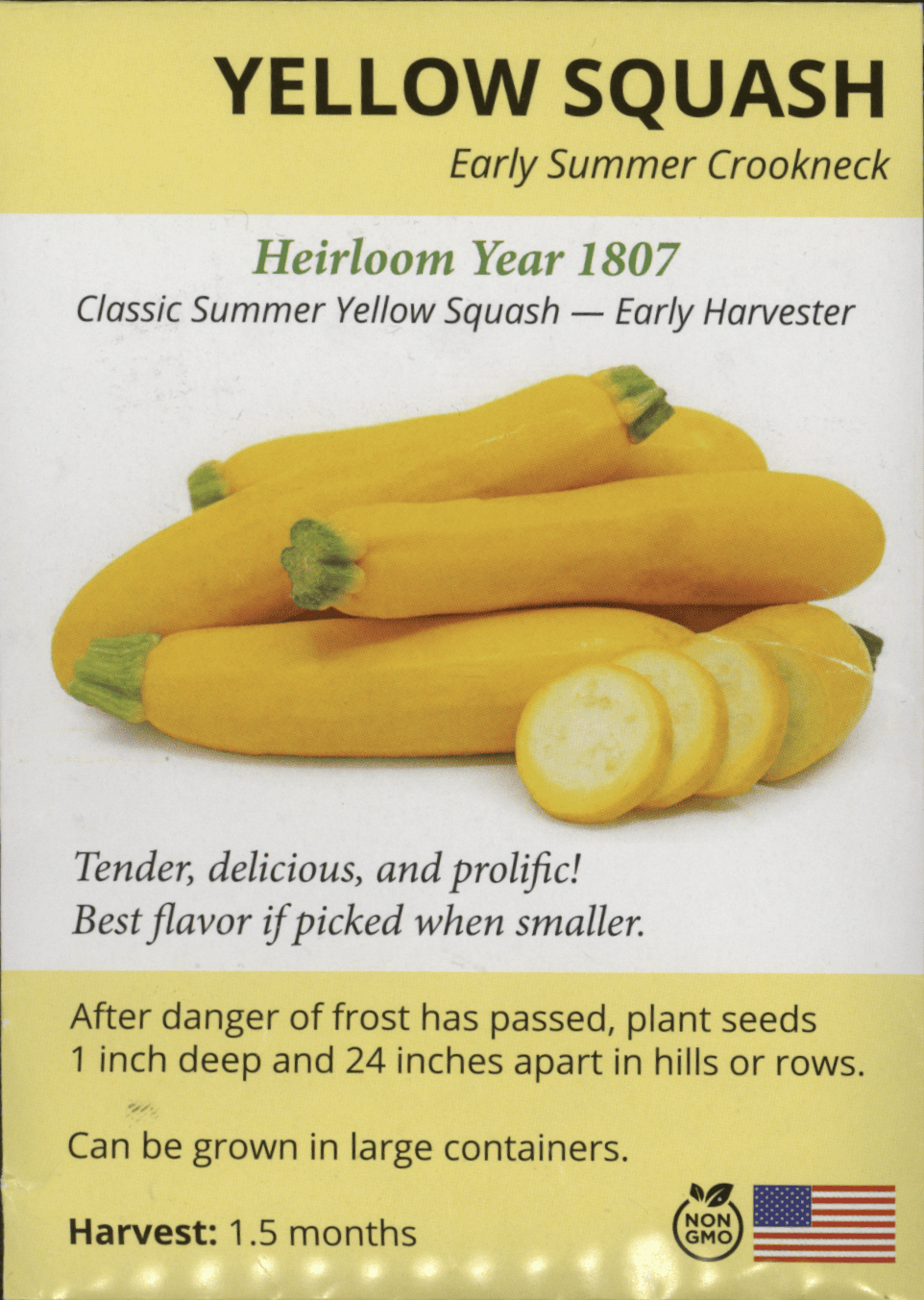
- Yellow Squash – Early Summer Crookneck
Description: The best known heirloom variety. Root nearly round, very smooth, medium size. Flesh deep red zoned with darker shade. Most excellent quality and remains in good condition for a long time. Their flavor is rich and sweet.
Culture: Sow every two weeks April through August for a continuous supply. Beets prefer cool weather and are at their tender best when grown quickly with plenty of moisture. Soil should be loamy, high in organic matter.
Harvest: Pick when roots have reached 3” (7.5 cm) in diameter.
Nutrition: Vitamin B, calcium and iron.
| Planting Depth | Seed Spacing | Spacing Between Rows | Days to Germination | Spacing After Thinning | Days to Maturity |
| ½ “ / 12mm | 1” / 2.5 cm | 12”- 18” / 30- 45 cm | 10-20 | 2”-3”/ 5-7.5 cm | 55-60 |
Description: A deliciously flavored vegetable of Italian origin. The large vigorous plants produce a central head 5”-6” (13- 15 cm) and then an abundance of 2”-3” (5-8 cm) laterals. Heads are bluish to dark green in color. Plants are tall and erect.
Culture: Plants can be started indoors 5-7 weeks before the last frost date and hardened before transplanting. Broccoli prefers cool weather.
Harvest: 58-90 days from transplant.
Nutrition: Especially high in vitamin C, riboflavin and calcium.
| Planting Depth | Seed Spacing | Spacing Between Rows | Days to Germination | Spacing After Thinning | Days to Maturity |
| ¼” / 6 mm | 1” / 2.5 cm | 2’-3’ / 60-90 cm | 10 | 18” -24” / 45-60 cm | 58-90 |
Description: Extremely meaty, smooth, dark green, round, tender pods, 6”- 7” (15-18 cm) long. Absolutely stringless at all stages of growth. This highly productive bean is ideal for home and market gardens.
Culture: After last frost date, soil approximately 50°, sow seed 4”, 1”-1.5” deep in rows 24” -36” apart. Thinning is not necessary. For continuous supply plant every three weeks until July 15th.
Harvest: Maturity 52 days. Pick regularly when every 2-3 days when pods are 4”-6” long to encourage new pod set. Extended season, high yield even in hot weather.
Nutrition: Good source of protein, dietary fiber, vitamins A and C.
Preserving: Can or freeze.
| Planting Depth | Seed Spacing | Spacing Between Rows | Days to Germination | Days to Maturity |
| 1”-1 ½” / 2.5-3.75 cm | 4” / 10 cm | 24”- 36” / 60-90 cm | 8-16 | 50-65 |
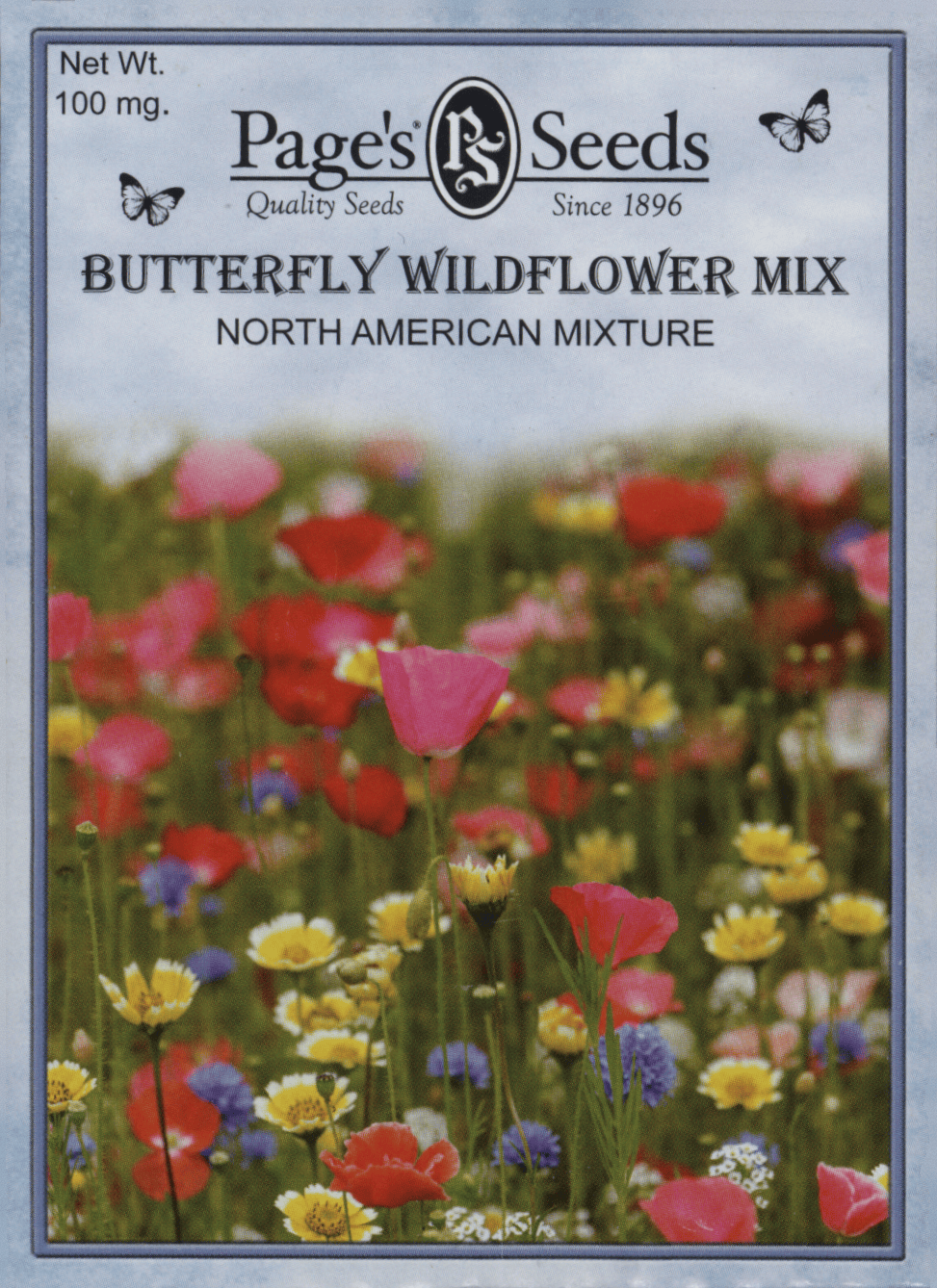
Description: This mix of high quality wildflower seed is ideal for flower beds and meadowlands where low maintenance is desirable>
Culture: Sow in early spring after last frost date for your area in well tiled soil, raked smooth. Choose a sunny location. Broadcast seed evenly and rake lightly into the soil. Regular watering is essential to establish plants. During the growing season, spot weed where needed. In fall or after frost, cut down or mow area to promote seed development for the next year. Over-seeding each year is recommended to renew annuals and reseed areas of sparse growth.
Seed Contents: Zinnia, Elegans; Cornflower, Dwarf Blue; Candytuft, Annual; Wallflower, Siberian; Pinks, Sweet William
| Planting Depth | Seed Spacing | Spacing Between Rows | Days to Germination | Spacing After Thinning | Days to Maturity |
| N/A | N/A | N/A | N/A | N/A | N/A |
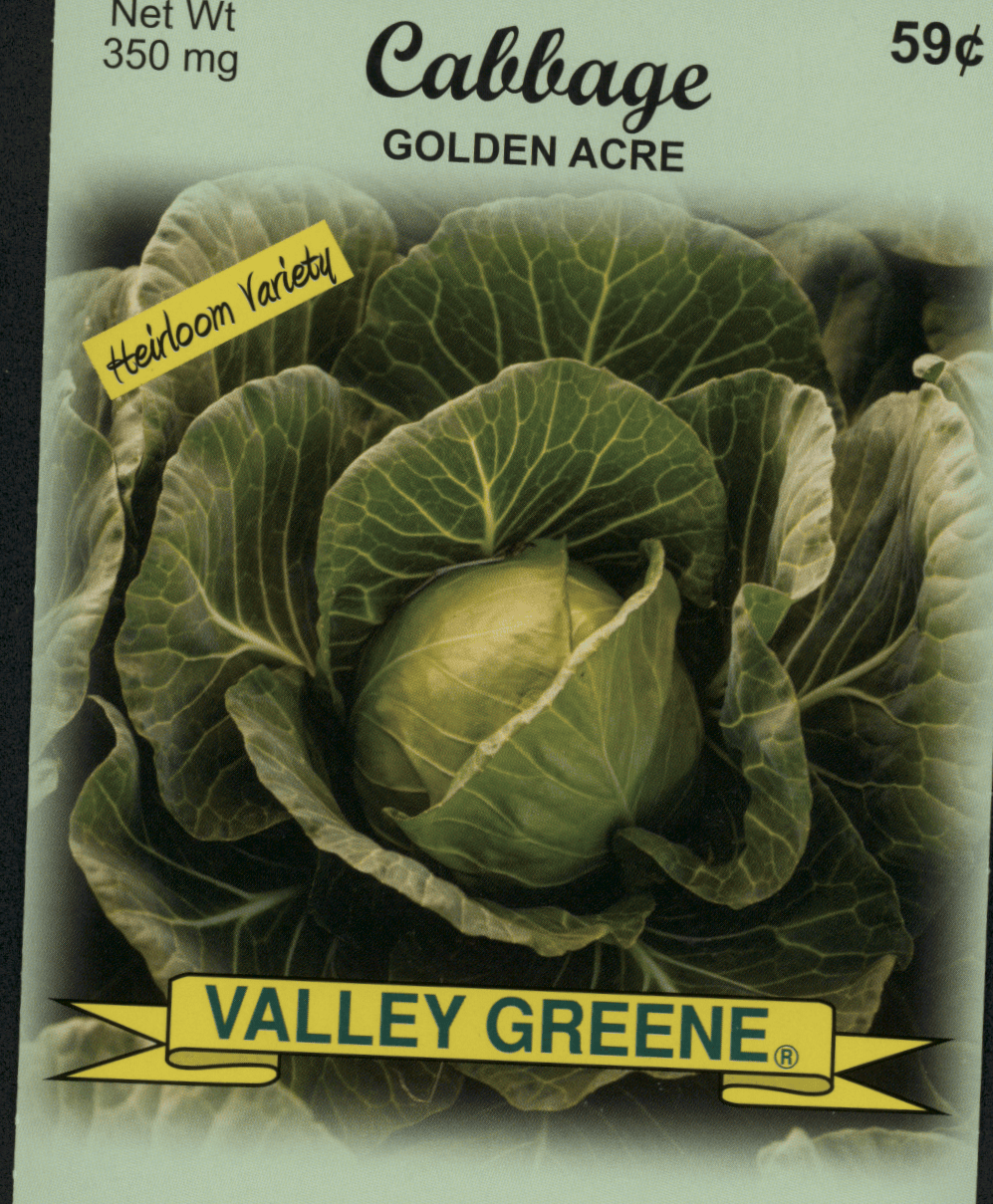
Description: This hardy, vigorous and delicious crop is easy to grow and ideal for small and large gardens. Plants thrive in cool weather, wrapper leaves semi-open.
Culture: Sow in full sun in fertile well drained soil. Can be started indoors and transplanted outdoors when plants are 1 to 2 months old.
Harvest: Between 60 to 100 days.
Nutrition: Vitamin C, calcium, low in calories
Suggestions: Delicious when cooked or eaten raw. Use in salads and coleslaw.
| Planting Depth | Seed Spacing | Spacing Between Rows | Days to Germination | Spacing After Thinning | Days to Maturity |
| ¼ “- ½ “ / 6-13 mm. | 4” / 10 cm. | 24” -36” / 60-90 cm. | 5-14 | 18”-24” / 46-60 cm. | 60-100 |
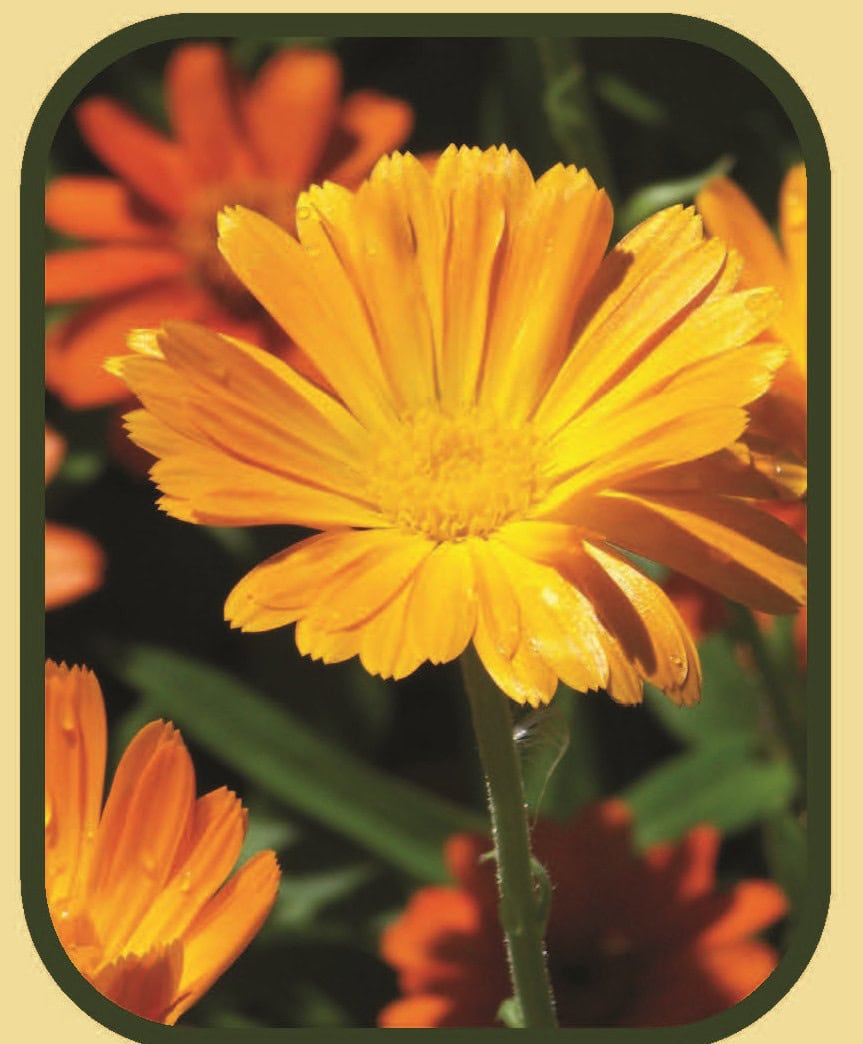
Calendula plants do well in cool weather, so you can direct sow the seeds outdoors in April and May. Plant calendula seeds 1/4 inch deep in well-prepared soil. Firm the soil and water gently. The seeds germinate best in soil temperatures between 55-70 degrees.
You can also start calendula seedlings indoors to get a head start on the growing season. Plant them 6 weeks before last frost, and transplant them outdoors in May after a gradual adjustment to outdoor life called “hardening off.” Calendula can be planted in the garden soil or in pots with good drainage and quality potting soil.
Calendula is also a good candidate for winter sowing.
Calendula are usually happy with weekly waterings, but provide more water during hot and dry periods. Fertilizer is not usually required if the soil is well-prepared, but if the soil is poor, use a mild organic fertilizer such as fish or kelp emulsion every month. Calendula will sometimes slow their blooming during the hottest parts of summer. Trim back the plants to 6” and keep them watered and they will rebound with fresh fall blooms. You can also replant seeds in July for new plants that will mature in the cool fall weather.
Calendula is an annual, which means it will flower and set seed in one season. Because calendula is a unique species within its Asteraceae family, it will not cross with any other garden flowers, including marigolds and daisies. Different cultivars of calendula will cross with each other, though, so if varietal purity is important to you just grow one variety at a time or isolate them.
The seeds are ready to harvest when the seed heads have dried and turned brown. Clip the seed heads and allow to air dry for a few more weeks indoors. When the heads are completely dry, remove the crescent-shaped seeds and store them in paper envelopes. Label and store them in a water and rodent-proof container in a cool, dark, dry place. Calendula seed processed and stored properly will remain viable for 3-5 years.
Back to Top
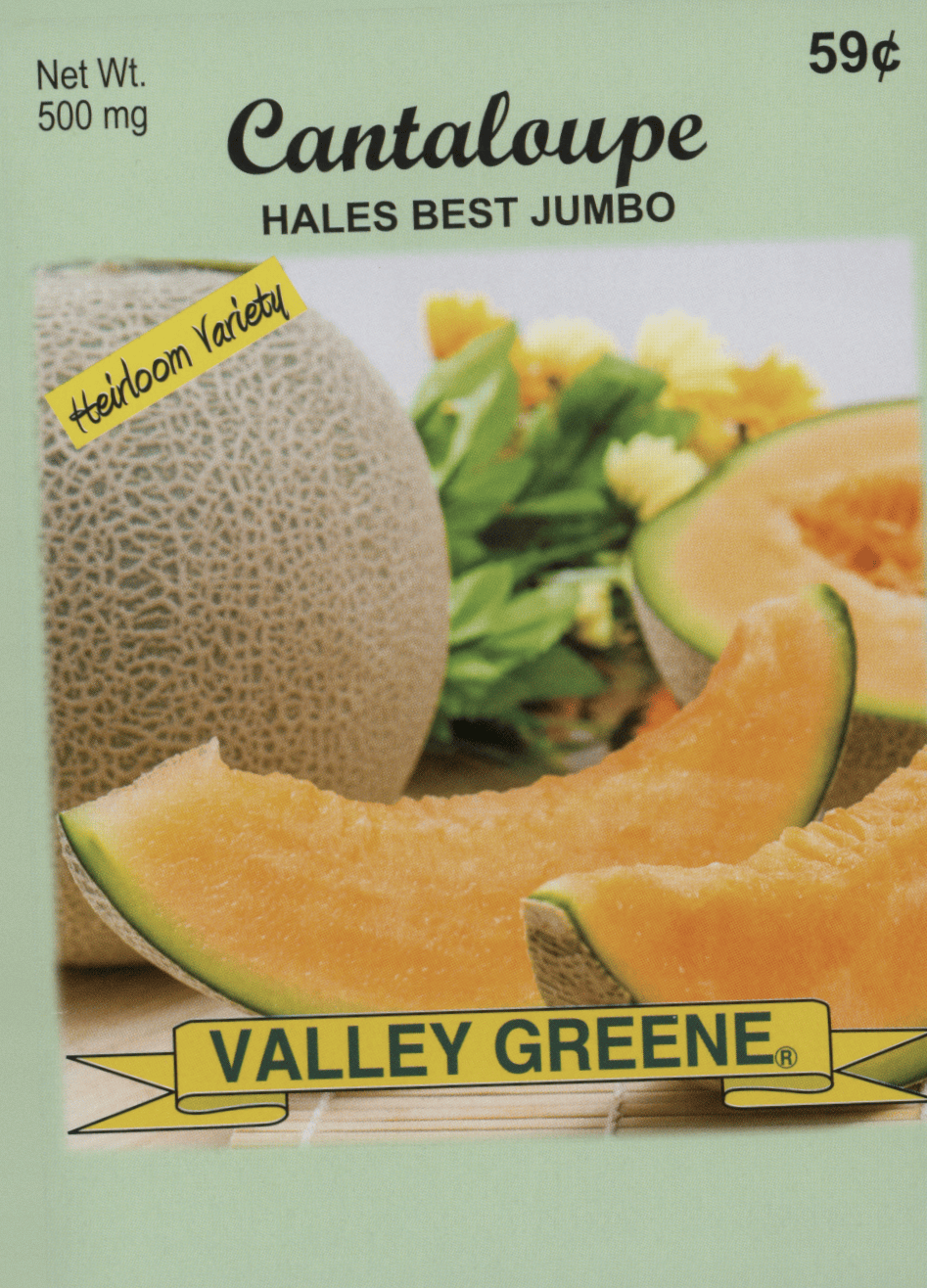
Description: Early shipper in south and southeast. Fruits 7 ½ “x 6” (19 x 15 cm). Delicious, salmon orange color flesh, covered with heavy netting, light rib. Drought resistant. Requires heat and sunshine.
Culture: Sow 5 or 6 seed in a group (hill), 3’ (90 cm) apart when soil is warm.
Harvest: Once fruit turns light yellow-gold it is close to ready. When the stems start to slip from the vine, pick and eat.
Nutrition: Vitamins C and A.
Suggestion: Chill before serving.
| Planting Depth | Seed Spacing | Spacing Between Rows | Days to Germination | Spacing After Thinning | Days to Maturity |
| 1” / 2.5 cm. | 3” / 7.5 cm. | 3’ -4’ / 90- 120 cm. | 10-20 | 2’-3’ / 60-90 cm. | 83 |
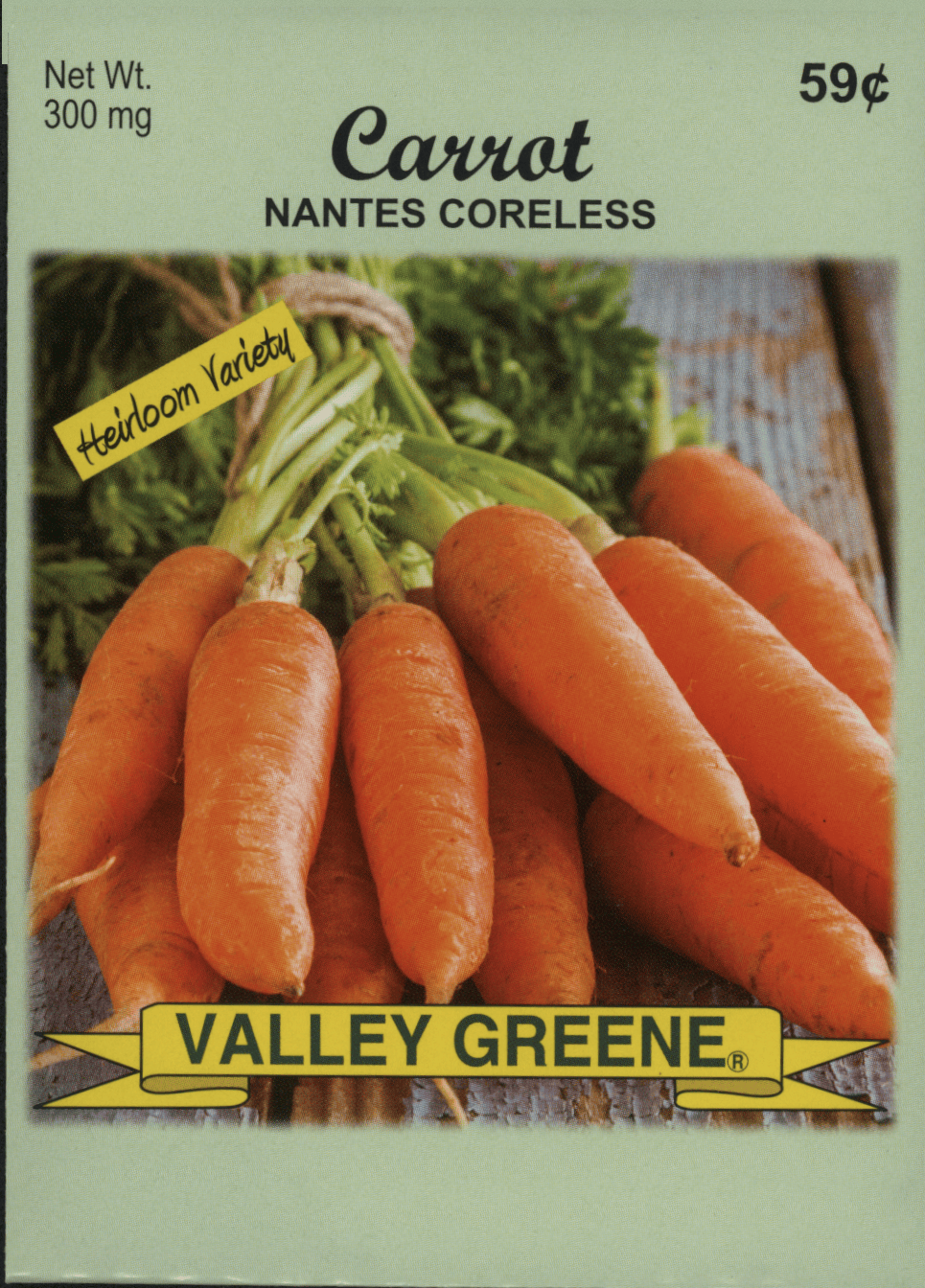
Description: Crisp carrot with a blunt end, slim well shaped orange roots 6”-7” long cylindrical, 1”-1 ½ “ thick.
Culture: Sow ½” deep and cover with light soil. Keep moist until seeds sprout. Does well in raised beds or soilless growing medium. Thinning is a must for all crops. Try snipping the tops of unwanted plants, as the action will not disturb the root of carrots left to mature.
Harvest: At 70 days. They are fine grained, tender, sweet and practically coreless. Excellent for freezing.
Nutrition: Low in calories, high in vitamin A.
| Planting Depth | Seed Spacing | Spacing Between Rows | Days to Germination | Spacing After Thinning | Days to Maturity |
| ½” / 13mm | 1” / 2.5 cm | 18” -24” / 46-60 cm | 10-15 | 3”/ 8 cm | 70 |
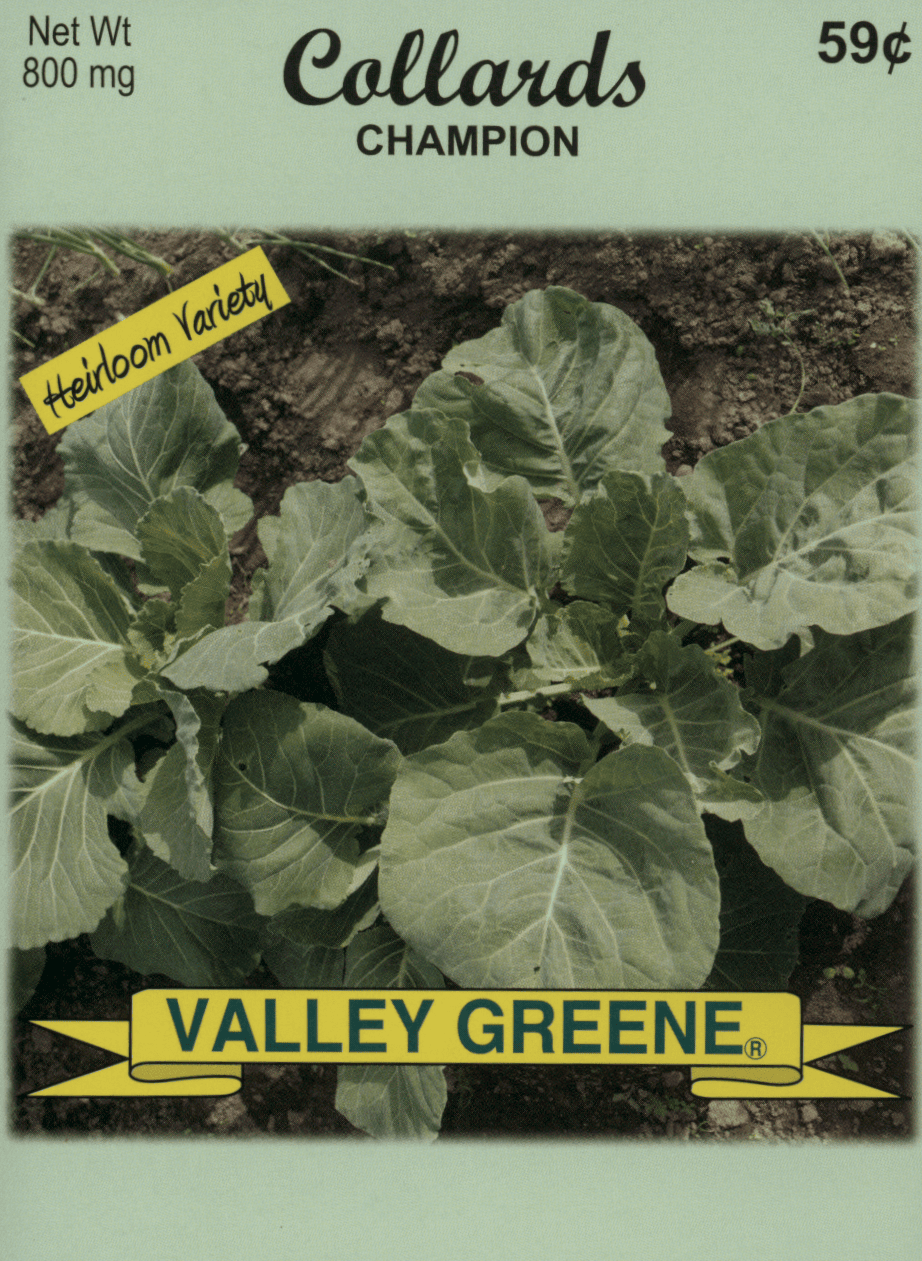
Description: Champion Collard is an open-pollinated variety that grows uniform large, slightly crumpled, juicy leaves. The collard leaves are cabbage-like, with a dark blue-green color. Champion collard has a mild cabbage-like flavor that improves with light frost. These leaves keep their eating quality 2 weeks longer than the Vates collard variety, making them excellent for home gardens and home consumption. They are slow to bolt non-heading type. Plants grow around 36 inches tall. Collards are best cooked, but young greens grown in cool weather are an excellent salad addition.
Culture: Sow seeds early spring and mid summer in the South. Sow in May in the North. Tolerates poor soils. Plants are easy to grow, tolerate heat and cold.
Harvest: 60-75 days.
Uses: The juicy leaves have a mid cabbage like flavor and are delicious boiled, steamed, or raw as an addition to salads.
| Planting Depth | Seed Spacing | Spacing Between Rows | Days to Germination | Spacing After Thinning | Days to Maturity |
| ¼”- ½ “ / 6-13 mm | 1” / 2.5 cm | 24” – 30”/ 60-75 cm | 5-14 | 12”-18”/ 30-45 cm | 60-75 |
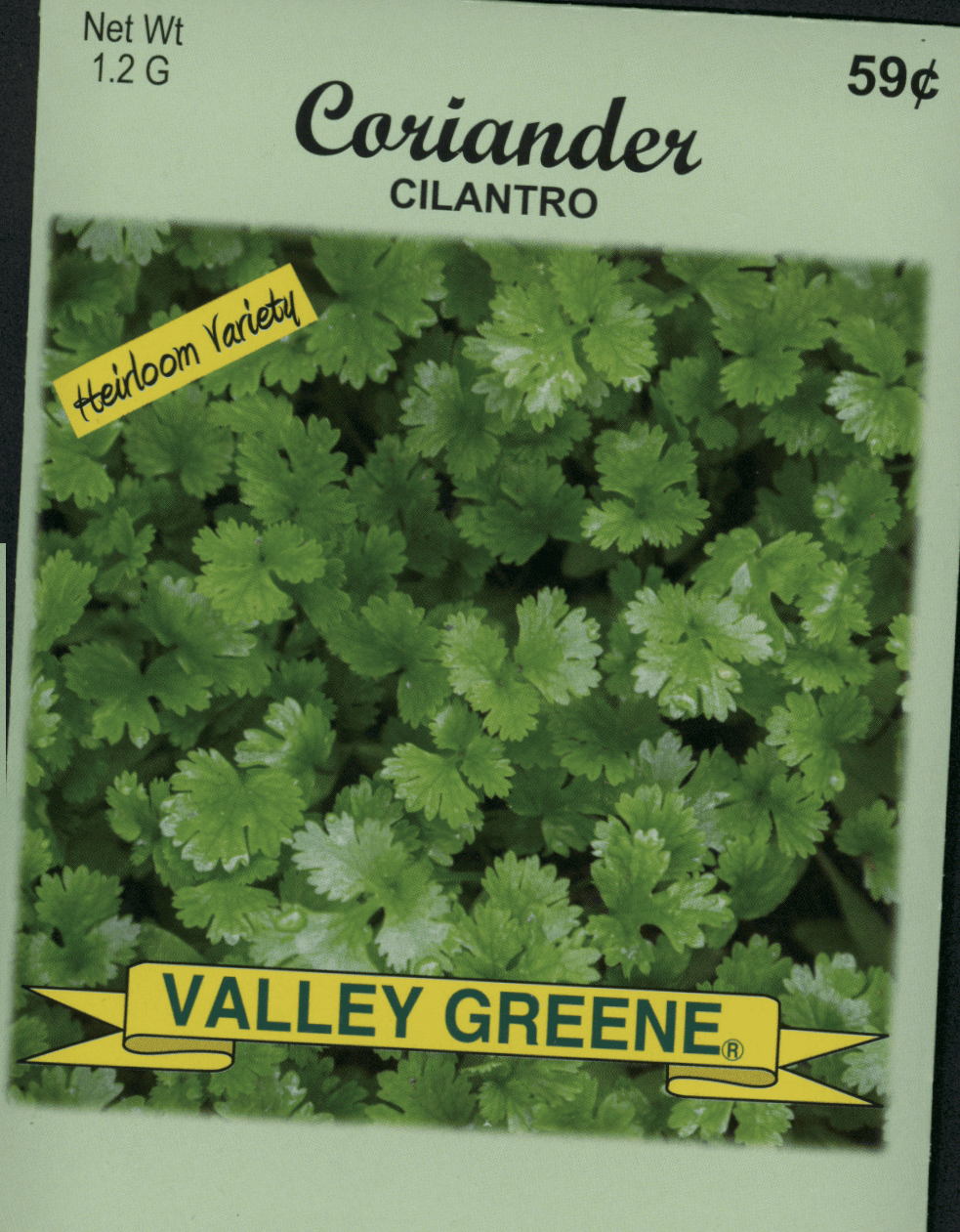
Description: Popular easy to grow annual, whose pleasantly aromatic and flavorful seeds are used in potpourri and to flavor pastry, beans, stew, sausage, and fish. Distinctively flavored leaves are best with fowl, meats, and spicy dishes. Grows 1’-2’ (30-76 cm) tall.
Culture: In full sun area, prepare rich, light soil. Sow in autumn to over winter in mild climates or early spring elsewhere. Thin to 8” (20 cm) apart.
Harvest: Pick young leaves anytime. Collect seeds when brown before they drop. Roots can be harvested in autumn.
Uses: Whole seeds add flavor to soups, sauces and vegetable dishes. Add leaves to curries, stews and sauces.
| Planting Depth | Seed Spacing | Spacing Between Rows | Days to Germination | Spacing After Thinning | Days to Maturity |
| ½ “ / 13 mm. | 1” / 2.5 cm. | 15” / 38 cm. | 15-20 | 8” / 20 cm. | 40-45 |
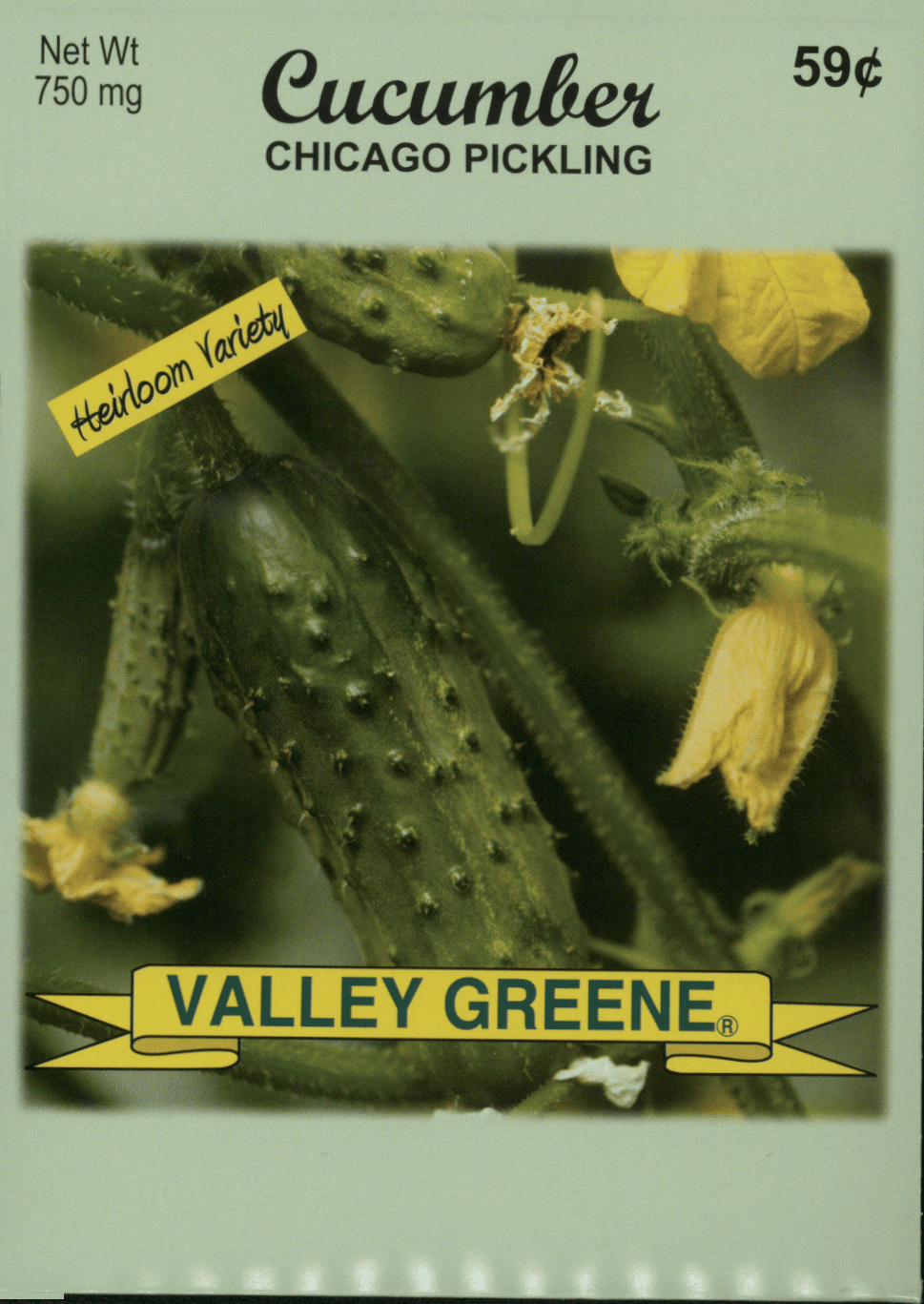
Description: Old time favorite for home gardens introduced in 1888. Thick, square ended, medium green, thin skinned fruits 6”-7” (15-17.5 cm) x 2 ½ “ (6.25 cm). Well warted, black spines. Disease resistant high yielding prolific variety mainly harvested young for pickling. If allowed to reach full maturity can be used as fresh slicing.
Culture: Plant in groups (hills) of 6-8 seeds, directly into loose, fertile soil, after weather has warmed. Seeds can be sown indoors 4-6 weeks prior then transplant to full sun area. Water and fertilize often.
Harvest: 50-60 days.
For Pickling: When fruits are 4” long.
Suggestions: Plant dill 2-3 weeks earlier for use in making pickles.
| Planting Depth | Seed Spacing | Spacing Between Rows | Days to Germination | Spacing After Thinning | Days to Maturity |
| ½ “- 2-2.5 cm. | 6-8 | 3” / 120-150 cm. | 7-14 | 3-4 | 50-60 |
Description: Open pollinated slicing cuke of later maturity. Deep green fruits 8 ½ “long. Slightly tapered. Disease resistant to scab and mosaic which is especially important in the Northeast.
Culture: Warm, rich, limed soil grows the best cucumbers. Sow 6-8 seeds per group and space groups 3’-5’ apart. Later thing to three plants 4” apart.
Harvest: Near 67 days, keep vines picked clean for a continual yield.
| Planting Depth | Seed Per Group (Hill) | Seed Spacing | Spacing of Groups (Hills) | Days to Germination | Thin to Plants Per Group (Hill) | Days to Maturity |
| 1”/ 2.5 cm | 6-8 | 3” / 7.5 cm | 3’-5’ / 90-150 cm | 10-20 | 2-3 | 67 |
Description: Excellent disease resistant, vigorous plants. Medium green with small white spines. Internal; structure solid and crisp. Bears many small, blocky fruits with tender skins. This variety is perfect for making all types of pickles.
Culture: Plant in groups of 6-8 seeds, 4’-5’ (120-150 cm) between groups. Thin to 3-4 seedlings per group.
Harvest: 1 ½ “long for tiny sweets to 5”-6” long for robust dills and spears. Frequent picking promotes more blossoms. Yields extremely well.
Uses: May use fresh in salads but this variety was bred for making homemade pickles.
| Planting Depth | Seed Per Group (Hill) | Seed Spacing | Spacing of Groups (Hills) | Days to Germination | Thin to Plants Per Group (Hill) | Days to Maturity |
| ½ “- 1” / 1.25-2.5 cm | 6-8 | 3” / 7.5 cm | 4’-5’/ 120-150 cm | 7-14 | 3-4 | 53-60 |
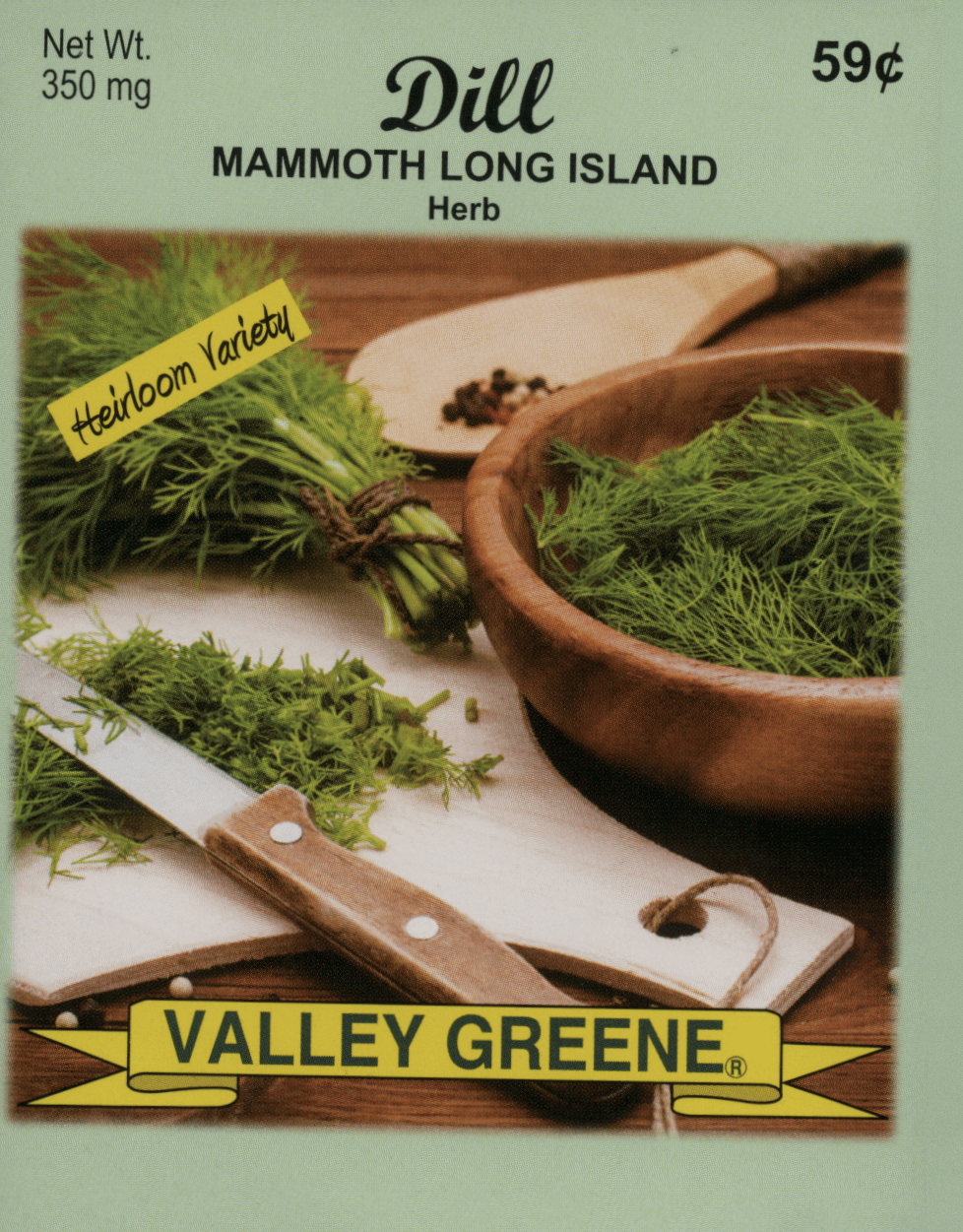
Description: Mammoth is a very popular tall growing annual (36” tall, and produces larger flower heads than Dill, Bouquet). Dill leaves are excellent in salads, dips, vinegars, and meat, fish or vegetable dishes. The seeds are essential in many pickle recipes.
Culture: Prefers well drained soil in full sun.
Spring: Sow direct outdoors 2 weeks after all danger of frost has passed.
Fall: Sow direct outdoors in mid to late August. Do not plant in hot summer months.
Harvest: Anytime after plant shows signs of vigorous growth, cut leaves at stem base. Remove flowerheads after they turn brown and allow clusters to mature.
Nutrition: Greens are high in vitamins A and C and minerals.
Uses: Culinary, cosmetic and medicinal
| Planting Depth | Seed Spacing | Spacing Between Rows | Days to Germination | Spacing After Thinning | Days to Maturity |
| ¼ “ / 6 mm. | 1” / 2.5 cm. | 24” / 60 cm. | 10-15 | 9”-12” / 23-30 cm. | 70 |
Description: This delicious and versatile vegetable is very popular worldwide. Plants grow 2’-3’ (60-90 cm) tall, with four or more oval fruits. One of our garden’s best meat substitutes.
Culture: Start indoors setting plants out in warm soil or sow outdoors in full sun after soil has warmed. Excellent plants for beds, intensive growing, and container growing.
Harvest: Beginning 78 days from date of transplant, long harvest season.
Suggestions: Excellent fried, in casseroles or combined with other vegetables, parmesan cheese.
Nutrition: Fat, sodium and cholesterol free. Good source of vitamins B and A.
| Planting Depth | Seed Spacing | Spacing Between Rows | Days to Germination | Spacing After Thinning | Days to Maturity |
| ¼” / 6 mm | ½” /13 mm | 2’ / 60 cm | 7-14 | 18”- 24” / 46-60 cm | 83 |
Description: This old favorite is excellent combined with other flowers or bulbs, and can also be used as edging in rock gardens or in mass plantings.
Culture: Sow seeds outdoors as soon as ground can be cultivated. Since plants bloom so quickly, there is little advantage to starting them indoors. Plants tolerate both dry and wet locations. Pick old flowers to reduce the number of volunteer seedlings and to promote side branching. Plants will often self sow.
| Type | Planting Depth | Seed Spacing | Spacing Between Rows | Days to Germination | Spacing After Thinning | Days to Maturity |
| Annual | 1/8” / 3 mm. | 1” / 2.5 cm. | N/A | 8-14 | n/a | n/a |
Description: Attractive, round green pods 5”-6” long, slightly curved, brittle, meaty, entirely stringless and of finest flavor. The plants are medium-large, spreading bush form, with dark green foliage; extremely productive. A favorite, high quality green pod bush bean for home use, canning and freezing.
Culture: Any good well drained soil with a pH above 6 will grow beans. After last frost date, sow seed approx. 2” apart, 1” deep, rows 24”-36” apart. Pick regularly when young to encourage new pod set. Beans do not tolerate cool, wet soil.
Harvest: Pick when pods are full.
Nutrition: Low calorie, high in fiber. Vitamins A and C, calcium, phosphorus.
| Planting Depth | Seed Spacing | Spacing Between Rows | Days to Germination | Spacing After Thinning | Days to Maturity |
| 1”- 1 ½ “ / 2.5 cm – 3.5 cm | 2”-3” / 5-8 cm | 24” / 60 cm | 8-16 | 6” / 15 cm | 50-65 |
Description: This bean is the best flat podded wax bean. Pods are 5 ¼ “ (13 cm) long. Stringless, tender and of fine flavor.
Culture: Any good well drained soil with a pH above 6 will grow beans. Plant from late spring to mid-summer, after soil warms. Stagger plantings one week apart for continuous yields.
Harvest: Pick regularly when young to encourage new pod set. Beans do not tolerate cool, wet soil
Nutrition: Low in calories, high in fiber, complex carbohydrates and protein
Preserving: Can or Freeze
| Planting Depth | Seed Spacing | Spacing Between Rows | Days to Germination | Spacing After Thinning | Days to Maturity |
| 1”-1 ½ “ / 2.5-3.5 cm. | 4” / 10 cm. | 24” / 60 cm. | 8-16 | 6” / 15 cm. | 50-65 |
Description: You can’t beat Kale if you are looking for tasty greens with high vitamin and mineral content.
Culture: Sow early spring. June or July. Soil should not be too rich for hardy plants Sturdy compact 12’-14’ (30-35 cm) x 2” (50 cm) plants.
Harvest: 55 days. Leaves are sweet, tender and crunchy especially when harvested after exposure to cool frosty weather.
Suggestions: Enjoy greens boiled, steamed, stir fried or as a fresh addition to salads and sandwiches.
| Planting Depth | Seed Spacing | Spacing Between Rows | Days to Germination | Spacing After Thinning | Days to Maturity |
| 3/16” / 1 cm. | 2” / 5 cm. | 2’ / 60 cm. | 5-14 | 12”-18” / 30/45 cm. | 55 |
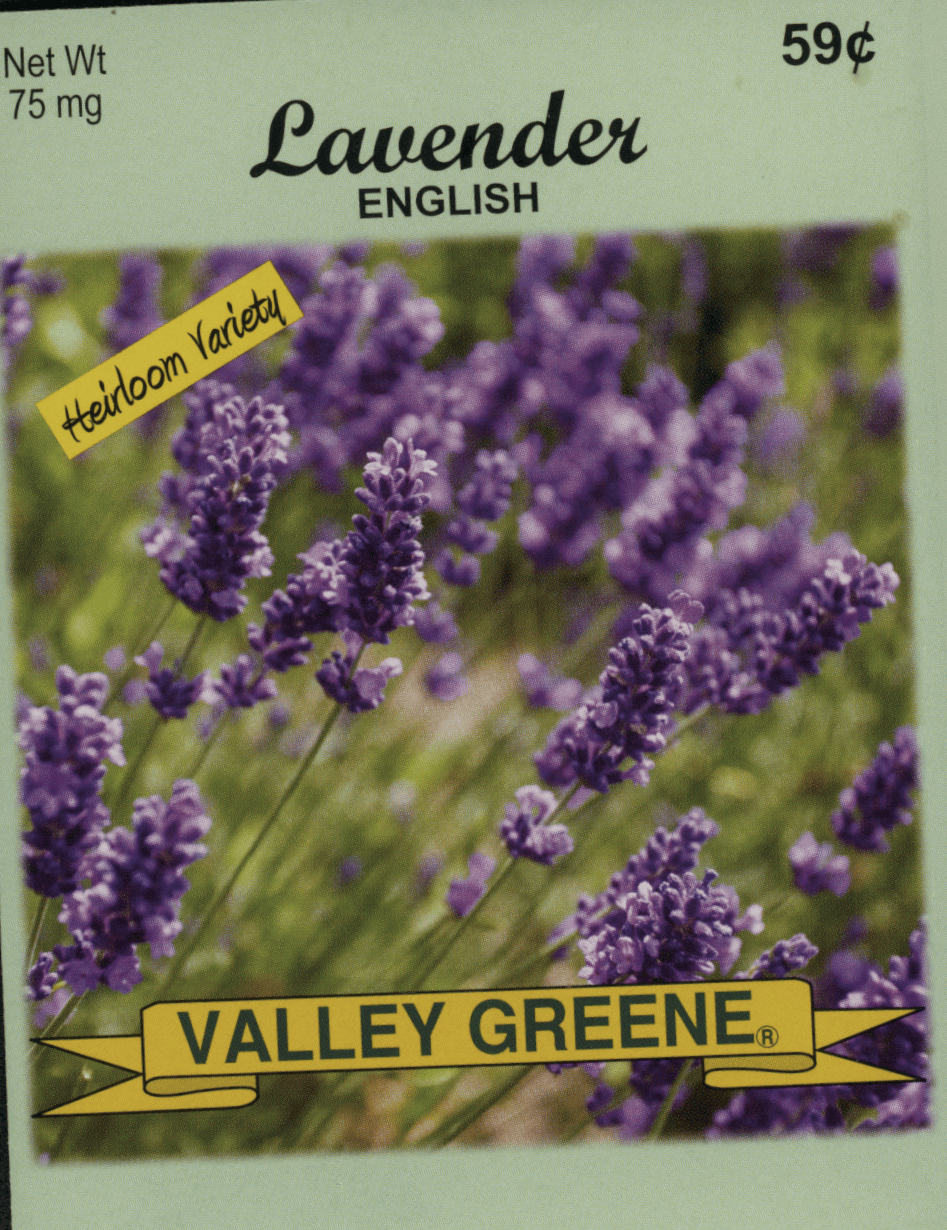
Description: English Lavender is an outstanding heirloom known for its sweetly fragrant oil. Dark lavender-blue flower spikes and compact growth habit. A cold hardy variety
Uses: Aromatic oil glands cover all aerial parts of the plants but are most concentrated in the flowers. The flowers flavor jams, vinegar, sweets, cream and Provencal stews, and are crystallized for decoration. Dried flowers add long-lasting fragrance to sachets and potpourri.
Habitat: Well drained, slightly limey soil, sun.
| Planting Depth | Seed Spacing | Spacing Between Rows | Days to Germination | Spacing After Thinning | Days to Maturity |
| ¼ “ / 6 mm. | ½ “ / 13 mm. | N/A | 25-30 | N/A | 2nd Year |
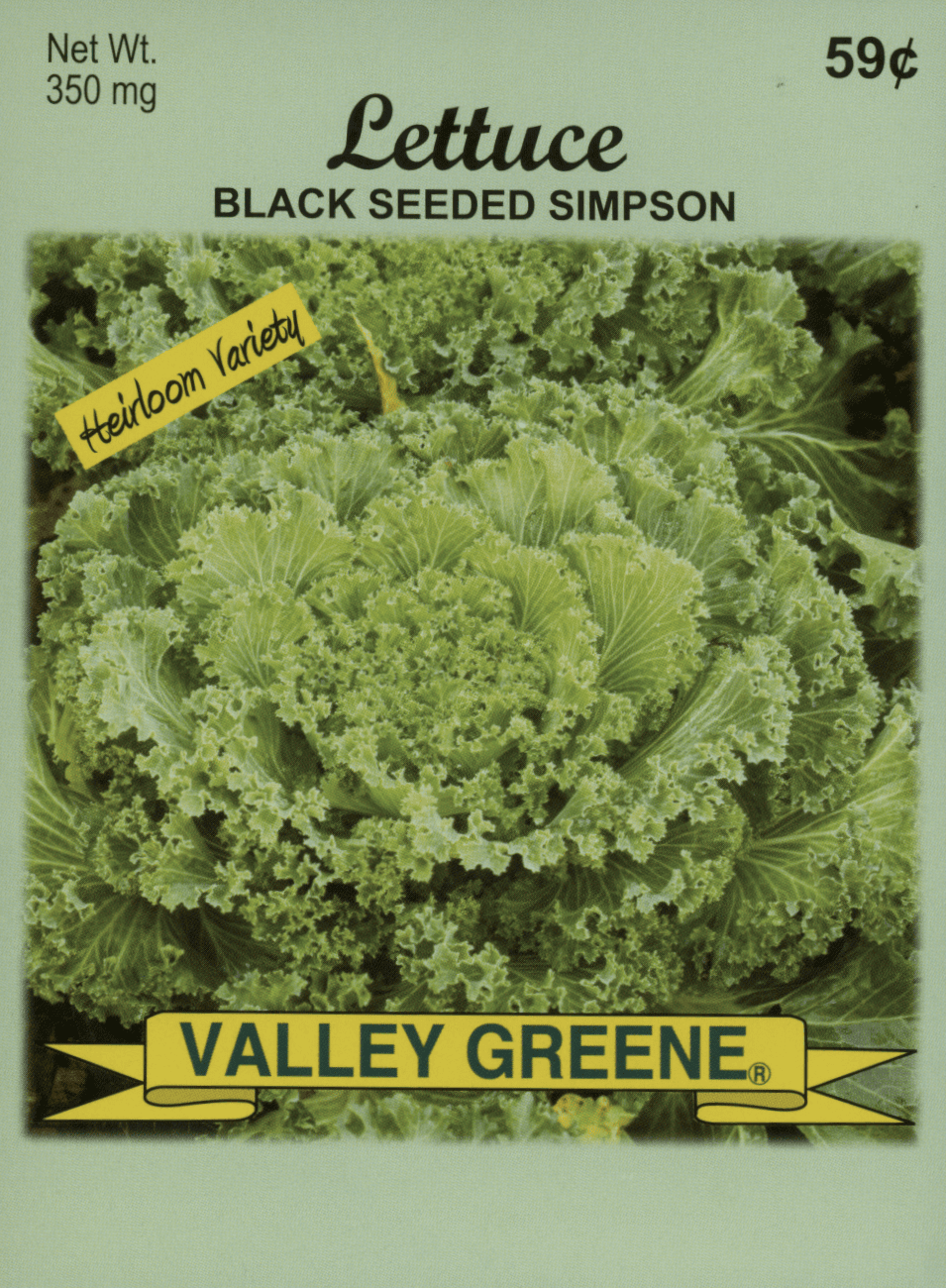
Description: Abundant, crinkly, light green leaves with a crisp texture make this one of the most popular loose-leaf lettuce varieties. The mild, delicate flavor is best if timed to mature during cool weather. Because it matures quickly, it can be grown later in the spring than most varieties.
Culture: Direct sow seed as soon as soil can be worked in spring. Repeat at two week intervals until late spring. Sow again in late summer and fall. Water regularly and fertilize when 3” (7.5 cm) tall. Provide light shade for late spring and summer sowing. Pick leaves anytime as needed, but before they yellow or reach the size of your hand; or cut entire plant. Rich in fiber and potassium with a moderate amount of vitamin A.
| Planting Depth | Seed Spacing | Spacing Between Rows | Days to Germination | Spacing After Thinning | Days to Maturity |
| ¼ “ / 6mm. | 1” / 2.5 cm. | 18” / 46 cm. | 7-20 | 10” -12” / 25-30 cm. | 65-85 |
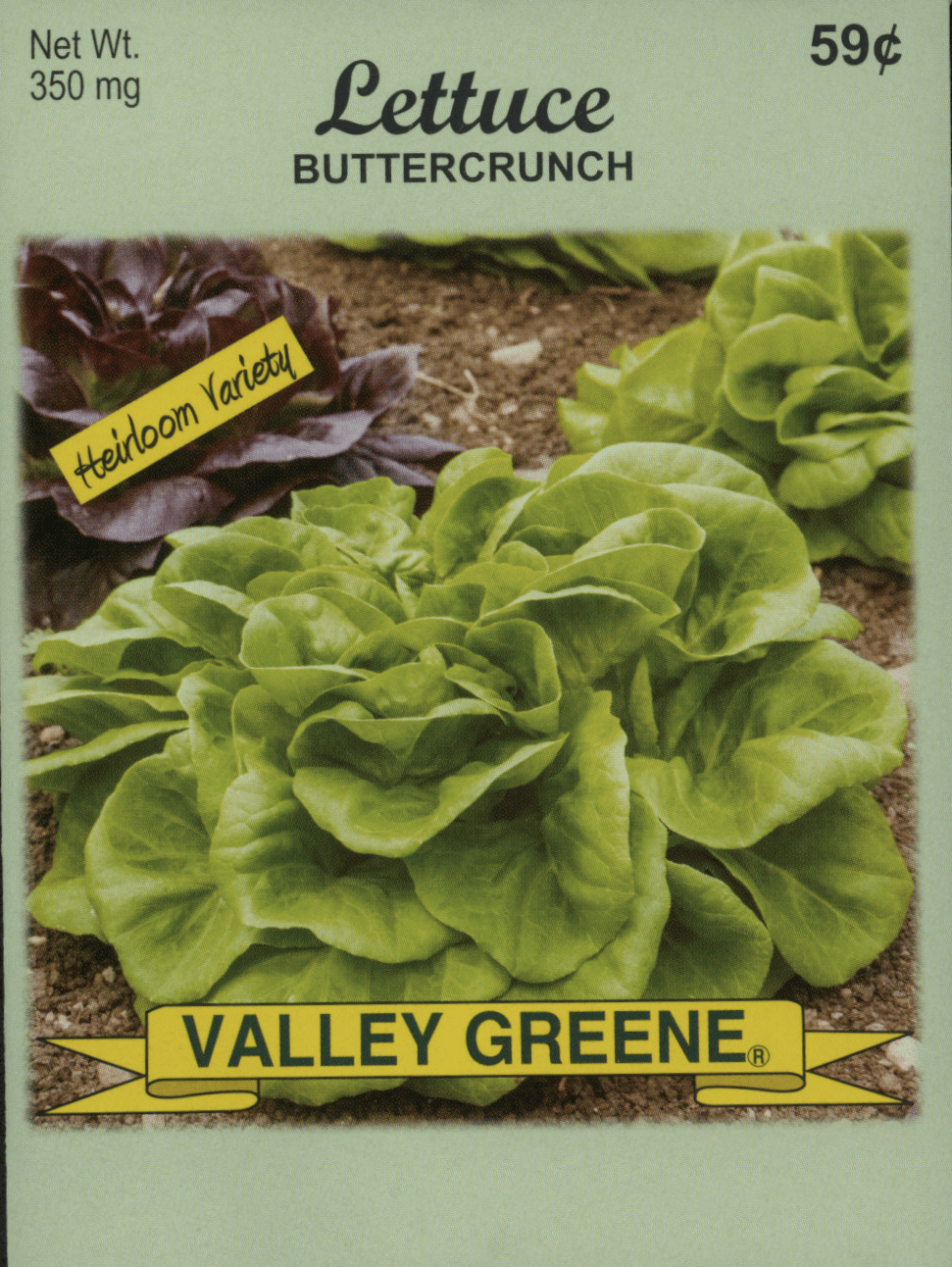
Description: Small rosette heads, 4 ½ “ wide, outer leaves are smooth and dark green. This butterhead variety is longstanding, slow-bolting, bibb type with considerable heat resistance.
Culture: Can be started indoors and transplanted or direct sown. Requires a rich, well drained soil, keep continually moist during the growing season. Root systems develop best when planted in spring.
Harvest: Successive planting every two weeks until fall for a continuous supply. Pick when heads are full.
Nutrition: Sources of vitamins A & C.
| Planting Depth | Seed Spacing | Spacing Between Rows | Days to Germination | Spacing After Thinning | Days to Maturity |
| ¼ “ / 6 mm. | 1” / 2.5 cm. | 18” / 46 cm. | 7-20 | 10”-12” / 25-30 cm. | 66 |
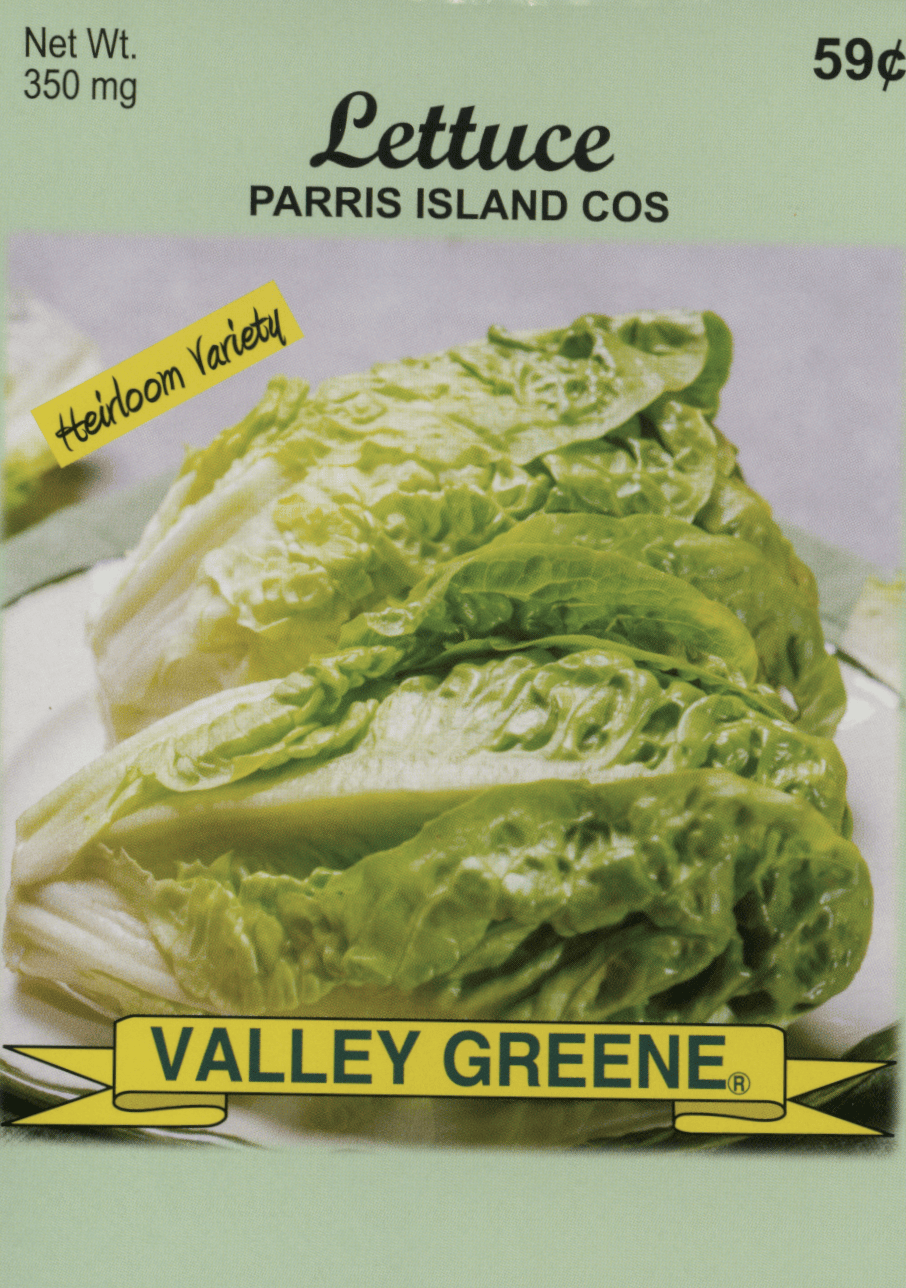
Description: Reaching maturity in 70 days, this hardy type lettuce forms large erect, oval, well folded heads with dark green outer leaves and lighter green interior. It is a valuable green salad variety; crisp, mildly bitter with and Endive-like flavor.
Culture: Lettuce thrives in cool weather and may bolt to seed in hot weather. When sowing, cover lightly; no more than ¼ “ and firm soil gently. Keep soil moist to promote germination. Provide light shade for summer sowing.
Nutrition: Rich in fiber and potassium, with a moderate amount of vitamin A.
| Planting Depth | Seed Spacing | Spacing Between Rows | Days to Germination | Spacing After Thinning | Days to Maturity |
| ¼ “ / 6 mm. | 1” / 2.5 cm. | 18” / 46 cm. | 7-20 | 10”-12” / 25-30 cm. | 65-80 |
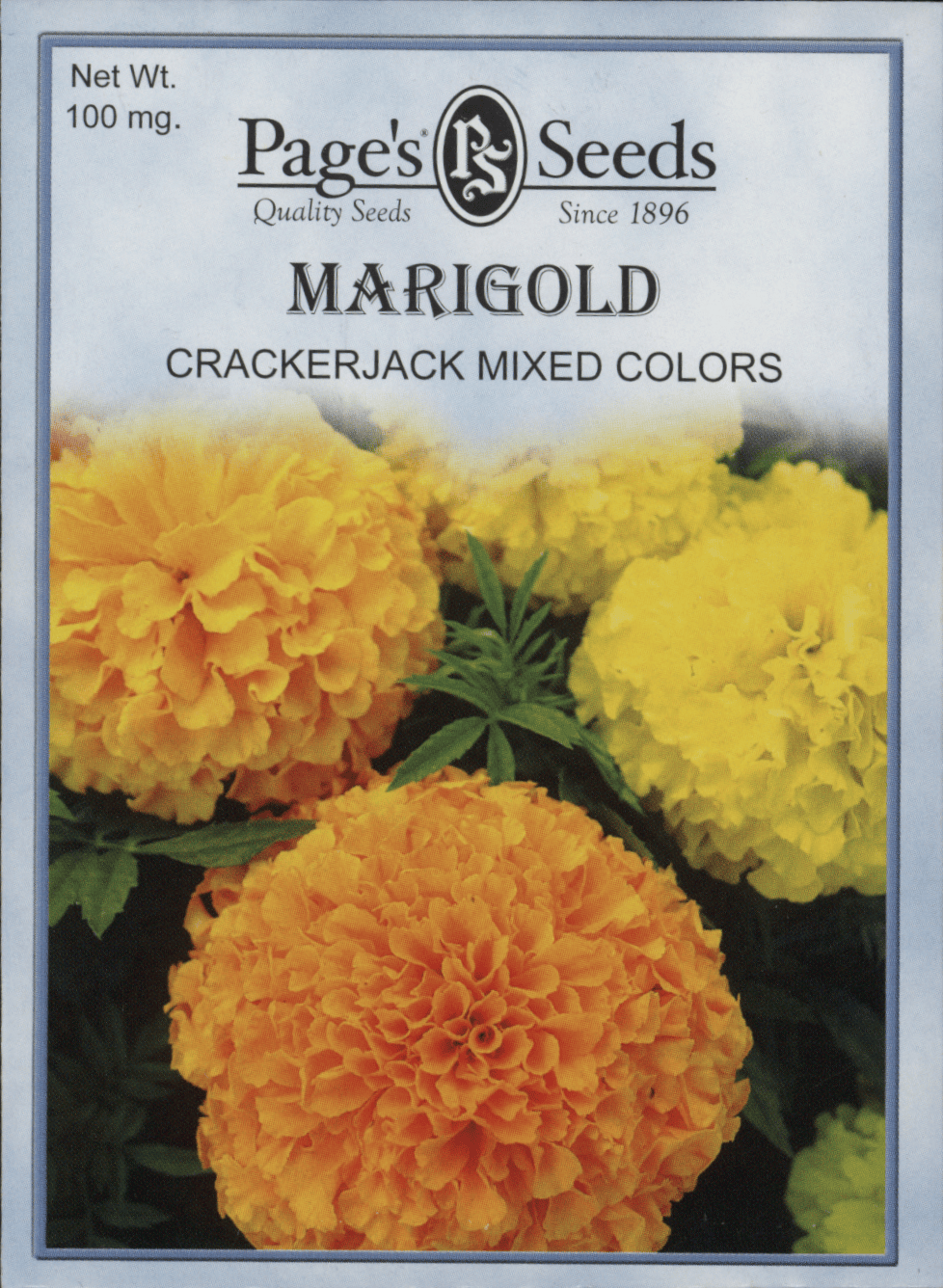
Description: Hedge type crackerjack grows on shrubby plants 24” (60 cm) tall and more, with thick branches that hold huge, fluffy blooms in the yellow, orange and gold color range. Double flowers measure 4”-5” (10-12.5 cm) across. Foliage is lacy. Fragrance is distinctive, clean and pungent. Resists almost every pest and disease. One of the most maintenance free and useful annuals. Even flowers through southern Florida summers. Excellent for containers and rock gardens. Long lasting as cut flowers.
Culture: Sow seeds indoors 4-6 weeks before outdoor planting time in light growing medium. Transplants well. Outdoors sow seed in fine soil, full sun where plants are to grow. Blooms in 12-13 weeks. Deadhead spent blooms. Fertilize in August.
| Type | Planting Depth | Seed Spacing | Spacing Between Rows | Days to Germination | Spacing After Thinning | Thinning Height |
| Annual | ¼ “ / 6 mm. | 1” / 2.5 cm. | N/A | 5-7 | 2” / 60 dm. | 4” / 10 cm. |
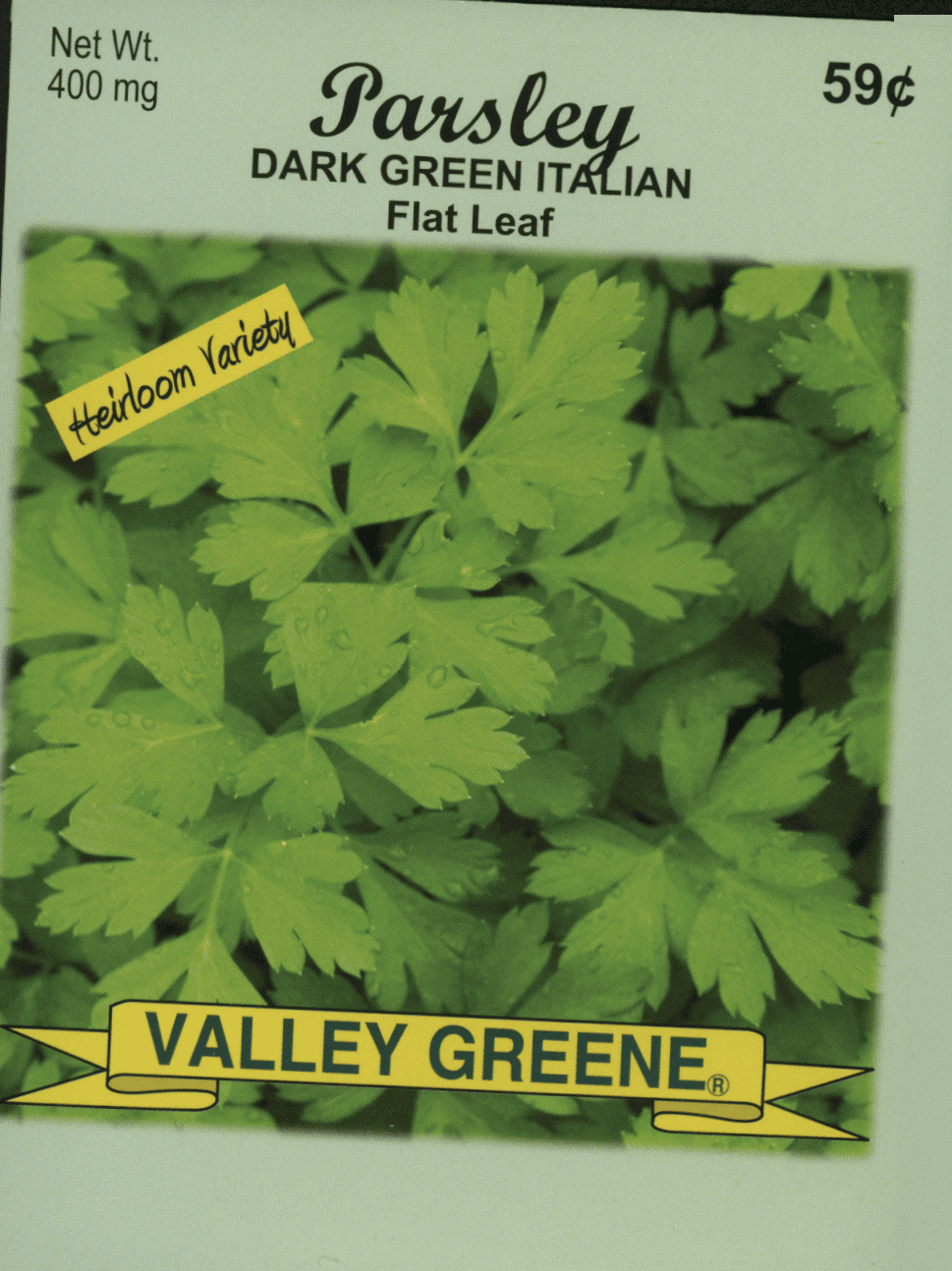
Description: this is the flat leaf form of the popular, easy to grow herb. Leaves have a slightly richer flavor than curled parsley, and are used as a garnish and for flavoring. Plant as a garden edging or tuck individual plants into flower garden voids. Parsley is perfect in window boxes and other containers.
Culture: Before sowing, wash seeds in a mild detergent solution; rinse and soak in water for 24 hours. Sow indoors 10-12 weeks before the last spring frost. Transplant to garden shortly before the last frost date. Be patient – seeds germinate slowly. Water regularly and fertilize when plants are 4” (10 cm) tall.
Harvest: Once plants are growing vigorously, pull or cut leaves at the stem base. Use whole or chopped. To store, dry thoroughly and place in airtight jars.
Nutrition: Good source of vitamin C and iron.
| Planting Depth | Seed Spacing | Spacing Between Rows | Days to Germination | Spacing After Thinning | Days to Maturity |
| ¼ “ / 6 mm. | 1” / 2.5 cm. | 15” / 38 cm. | 15-20 | 8” / 20 cm. | 65-75 |
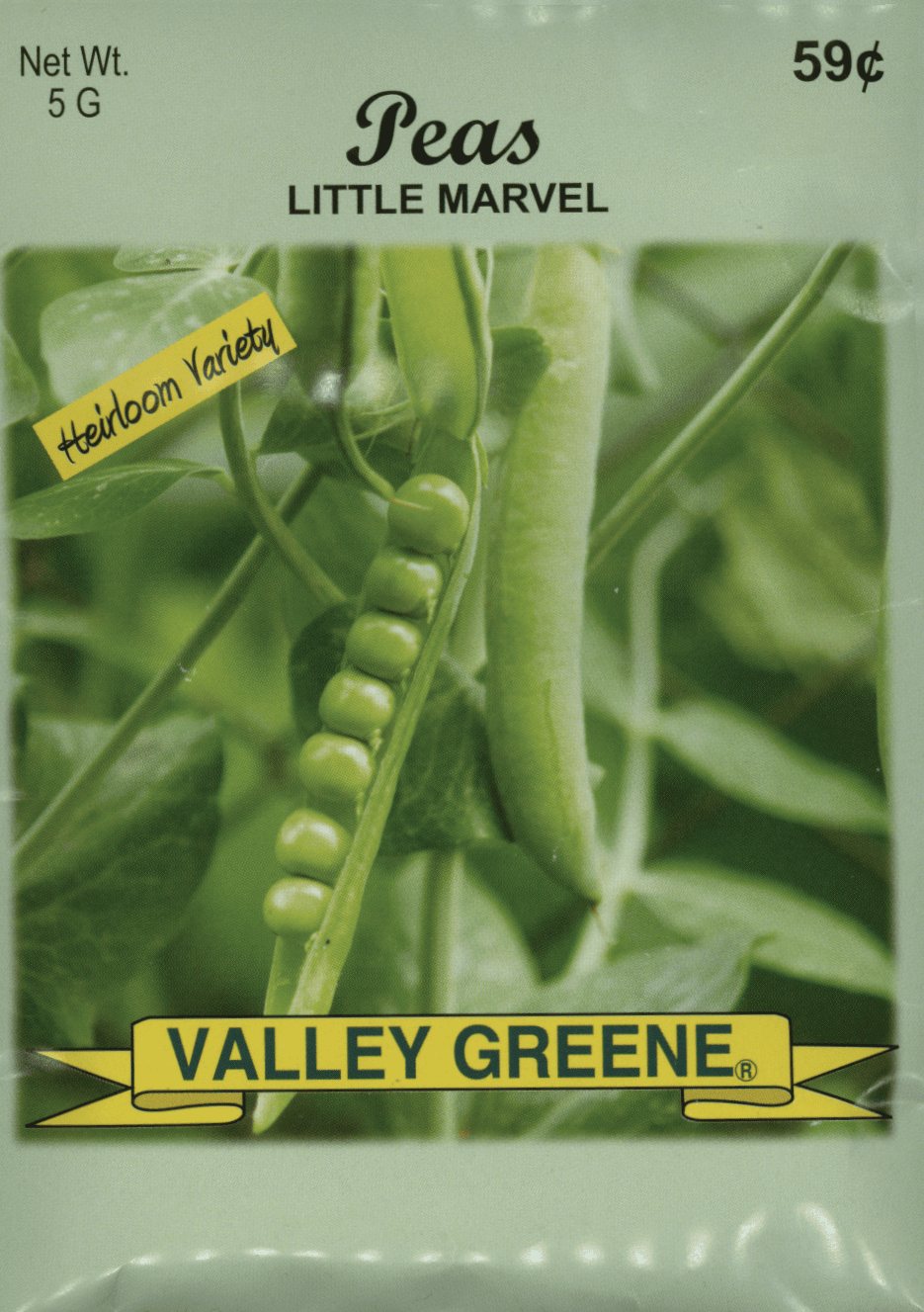
Description: Excellent home garden variety. Vigorous bushy 15”-20” dwarf plants. Tightly packed pods with 6-7 medium sized dark green peas when mature. Plants produce mostly double borne pods of fine quality peas. This heirloom variety produces high yields.
Culture: Sow as early in spring as ground can be worked. Sow again in mid-summer for a smaller fall crop.
Tips: Trellis between two rows.
Harvest: 65-85 days
Suggestion: Shell and cook, combine with vegetables, can or freeze.
Nutrition: Vitamin C, calcium and iron.
| Planting Depth | Seed Spacing | Spacing Between Rows | Days to Germination | Spacing After Thinning | Days to Maturity |
| 1”/ 2.5 cm | 2”/ 5 cm | 3’/ 90 cm | 7-15 | No Thinning | 65-85 |
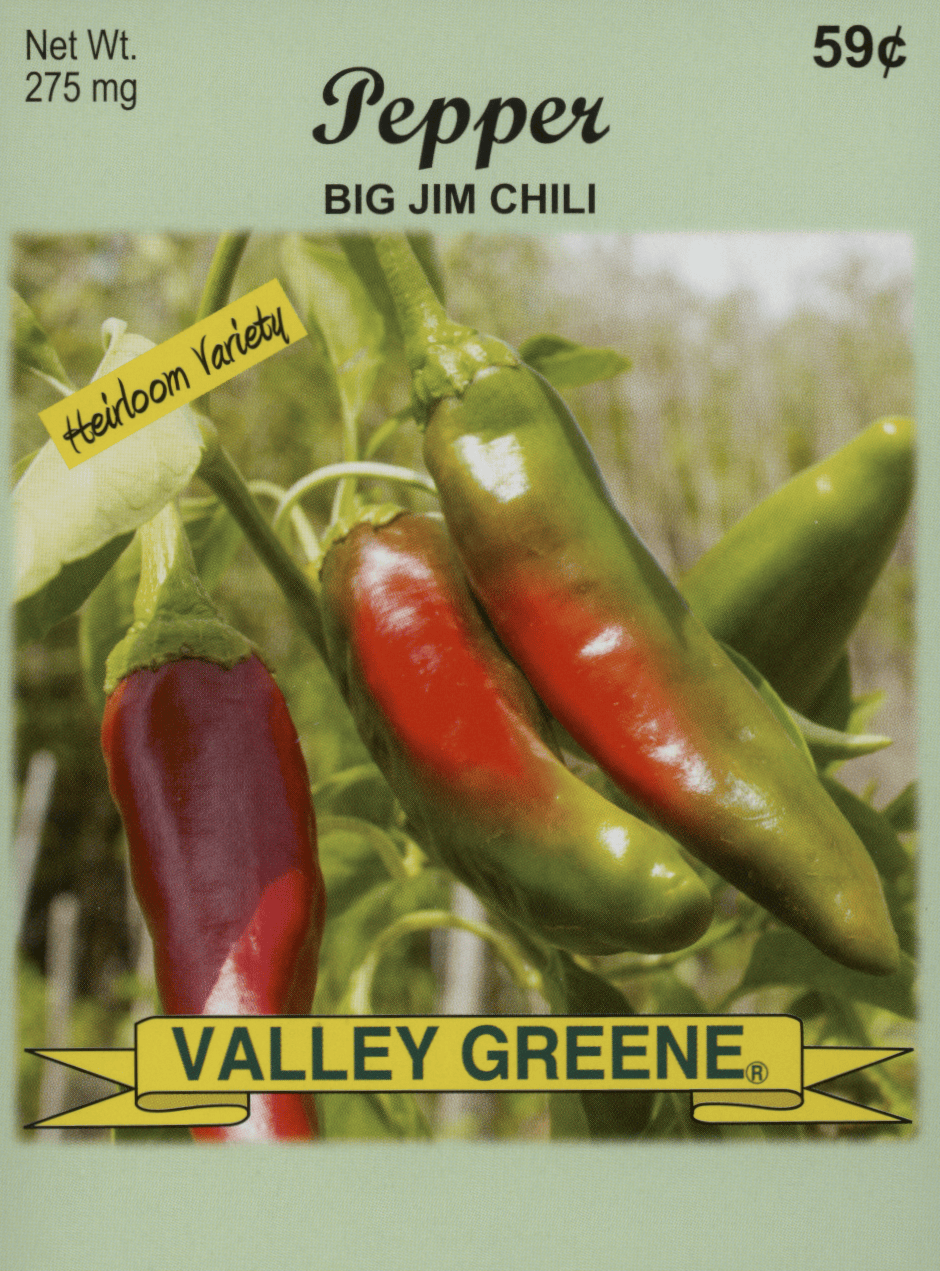
Description: Open pollinated 75-80 days. Fleshy tapered pods average 7”-8” long, about 4 oz. at maturity. This variety developed by Dr. Nakayama has held the world’s record for longest Chili Pepper grown to 13” (32.5 cm) with superior yield, plants producing 25-40 pods.
Culture: Start indoors 6-8 weeks before last frost date and transplant into fertile, well tilled soil 18”-24” (45-60cm) apart.
Tips: Lay black plastic mulch, cut 6” (15 cm) diameter holes for pepper transplants.
Harvest: Fruit ripens all at once 75-80 days from transplant. Plants can be pulled and hung upside down for drying.
Uses: Frying, salads and grinding into chili powder, drying fresh market/home garden.
| Planting Depth | Seed Spacing | Spacing Between Rows | Days to Germination | Spacing After Thinning | Days to Maturity |
| ¼ “ / 6 mm | 2”/ 5 cm | 24”-30” / 60-75 cm | 14-21 | 18”-24” / 40-60 cm | 75-80 |
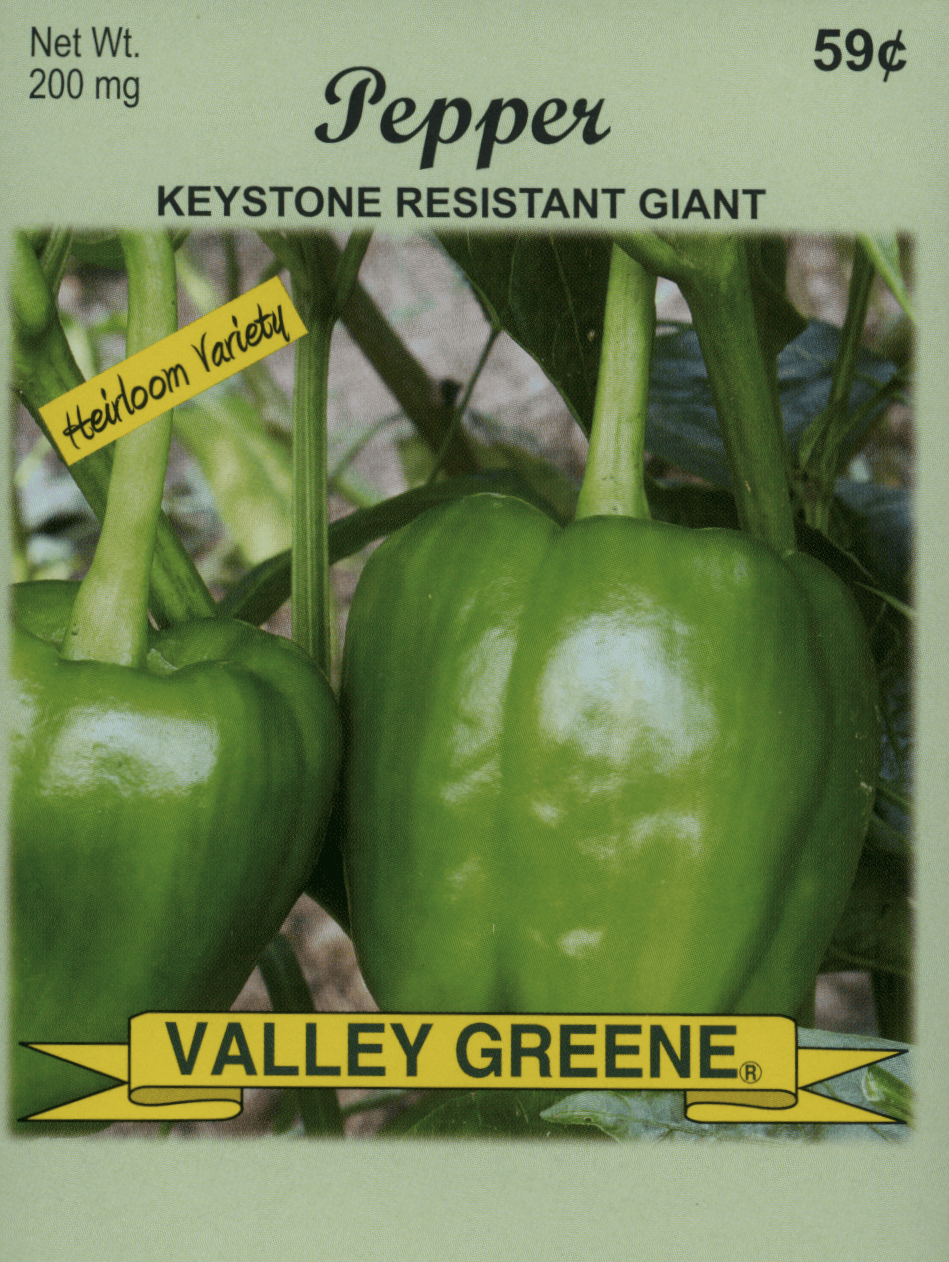
Description: Large fancy quality, sweet bell type. 4”-5” (10-12.5 cm) x 3.75” (9.5 cm), mostly four lobe fruits, thick dark green to red flesh. Vigorous upright plants 28”-30” (70-75 cm) with thick stems ensure continuous harvest- excellent yields. Mosaic resistance.
Culture: Sow seed indoors 8- 1 weeks before last frost date. Transplant into warmed soil in full sun.
Harvest: 76-80 days from transplant date. Harvest regularly for continuous crop.
Nutrition: Excellent source for vitamin A and C.
| Planting Depth | Seed Spacing | Spacing Between Rows | Days to Germination | Spacing After Thinning | Days to Maturity |
| ¼ “ / 6 mm | 1” / 2.5 cm | 18”-30” / 45-75 cm | 10 | 15” -20” / 37.5 – 50 cm | 76-80 |
Description: Medium orange, slight suture texture with flesh of pale orange. Grows 9”-10” x 7”-10” diameter, 10-18 lbs. Good cooking quality. Stores well.
Culture: Direct sow seed after soil has warmed into rich, fertile soil in groups (hills) of 5-8 seeds. Thin to the 2 or 3 strongest plants per group. Water regularly and fertilize when lateral runners being to spread. They are easy to grow and require sufficient space for the wines to spread. Excellent for a child’s garden.
Harvest: A full season pumpkin about 100 to 120 days. When skin is hard, cut from vine with a 3” (7.5 cm) piece of stem attached.
Nutrition: Excellent source of vitamin A and potassium.
| Planting Depth | Seed Per Group (Hill) | Spacing Between Seeds | Days to Germination | Thin to Plants Per Group (Hill) | Days to Maturity |
| ¾ “ – 1” / 2-2.5 cm | 5-8 | 3”/ 7.5 cm | 10 | 2-3 | 100 |

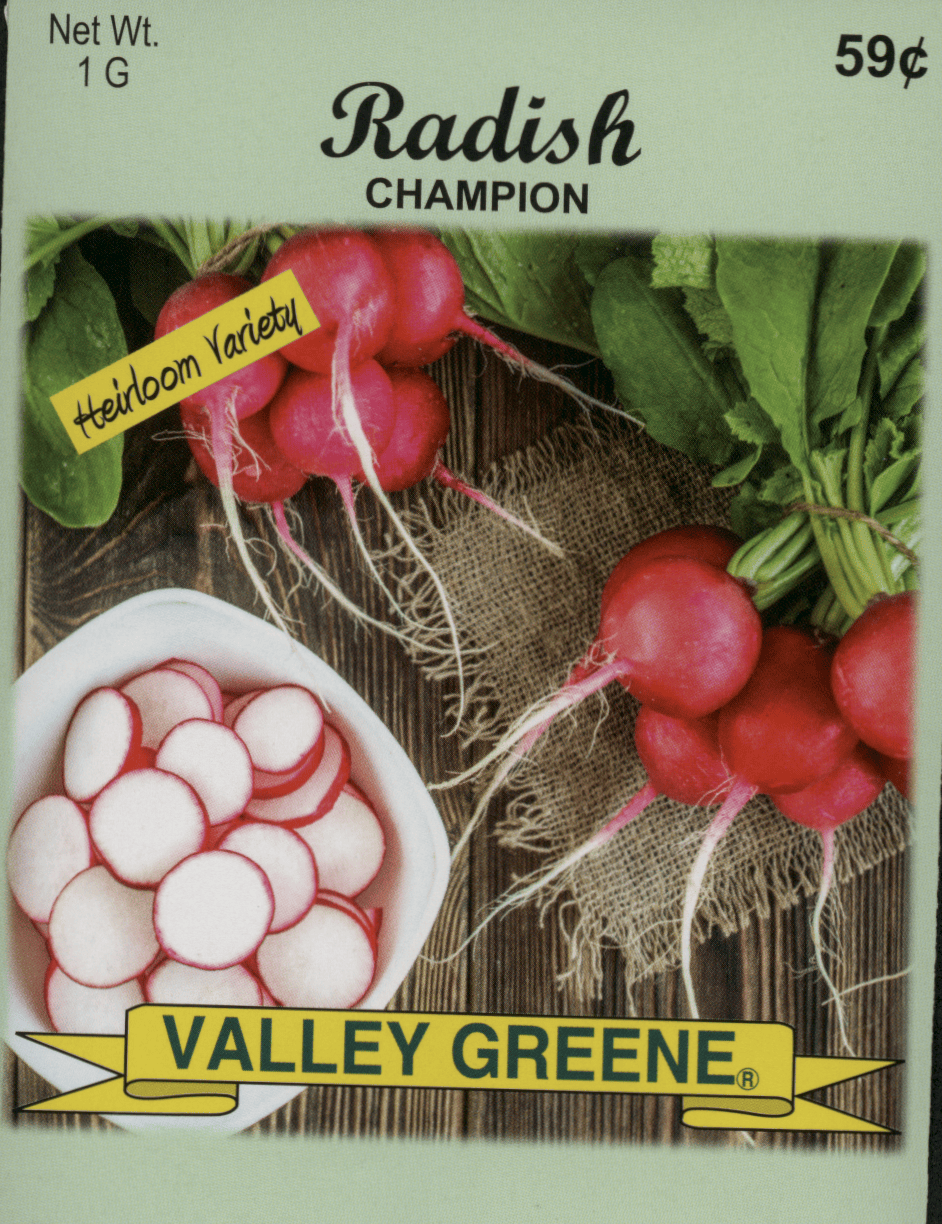
Description: Easy to grow and fast growing vegetable makes it ideal for children to grow. Bright red, 1”- 1 ½ “ (2.5-3.75 cm ) globes, firm mild flesh grows large but not pithy, holds well and can stand cold. Excellent as a salad vegetable, eaten plain or as a garnish.
Culture: Sow spring and/ or fall. As with all root crops thinning is most important.
Harvest: When roots are 1” – 1 ½ “(2.5-3.75 cm) in diameter, overgrown root become stringy.
Nutrition: Source of vitamin C.
| Planting Depth | Seed Spacing | Spacing Between Rows | Days to Germination | Spacing After Thinning | Days to Maturity |
| ¼” / 6 mm | ½” – 1” / 1.25- 2.5 cm | 6”-12” / 15-30 cm | 7-14 | 1” – 2” / 2.5-5 cm | 20-30 |
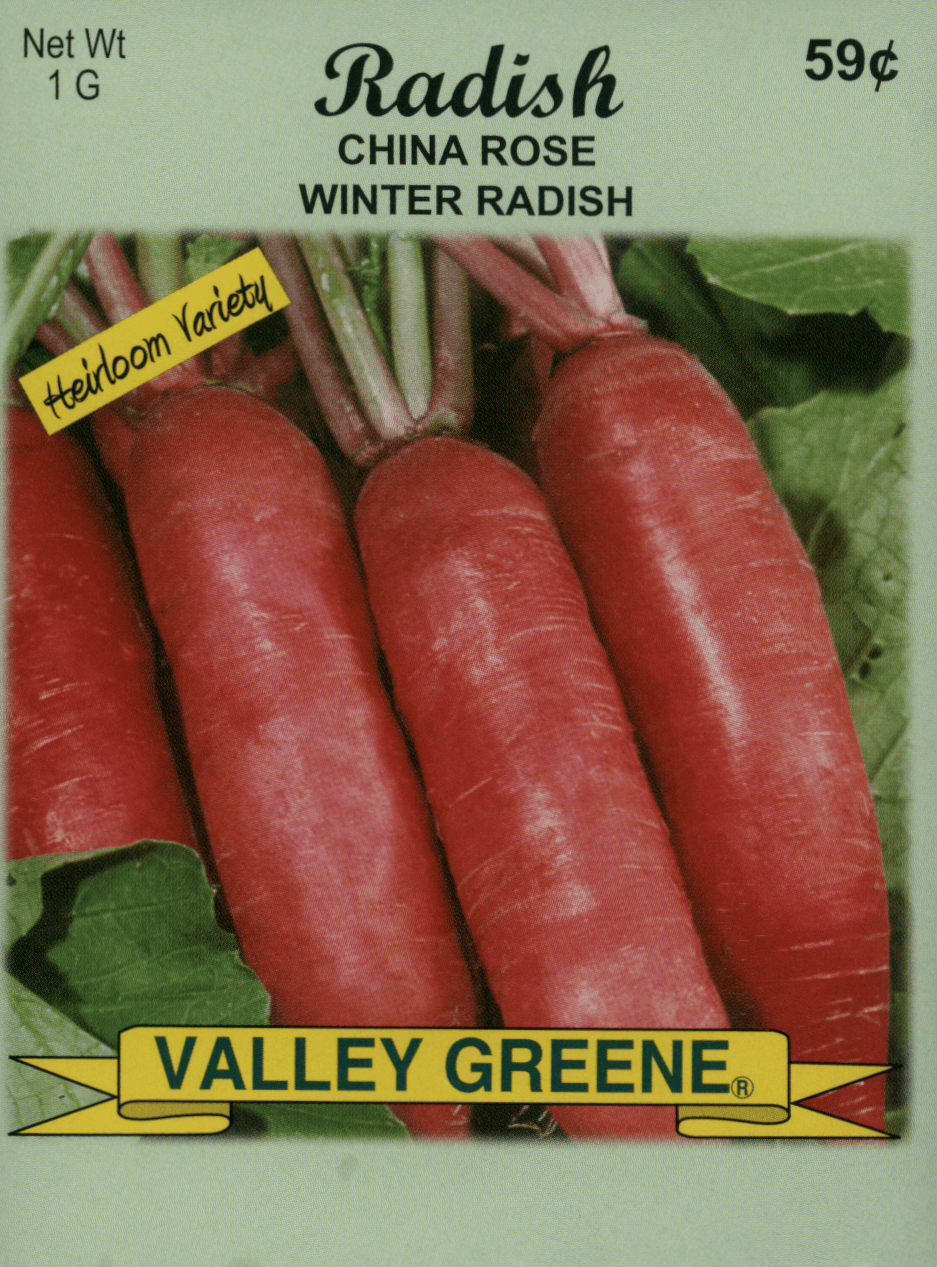
Description: Easy to grow and fast growing makes it ideal for children to grow. Smooth rose colored skin, 6”-8” x 2” diameter, becomes larger towards tip, firm mild flesh grows large but not pithy, holds well and can stand cold. Excellent as a salad vegetable, eaten plain or as a garnish.
Culture: Sow spring and/ or fall. Bred for upland and sandy soils. As with all root crops thinning is most important.
Harvest: When roots are 2” (5 cm) in diameter.
Nutrition: Source of vitamin C.
| Planting Depth | Seed Spacing | Spacing Between Rows | Days to Germination | Spacing After Thinning | Days to Maturity |
| ¼” / 6 mm | 1” / 2.5 cm | 12” / 30 cm | 7-14 | 2” /5 cm | 27-55 |
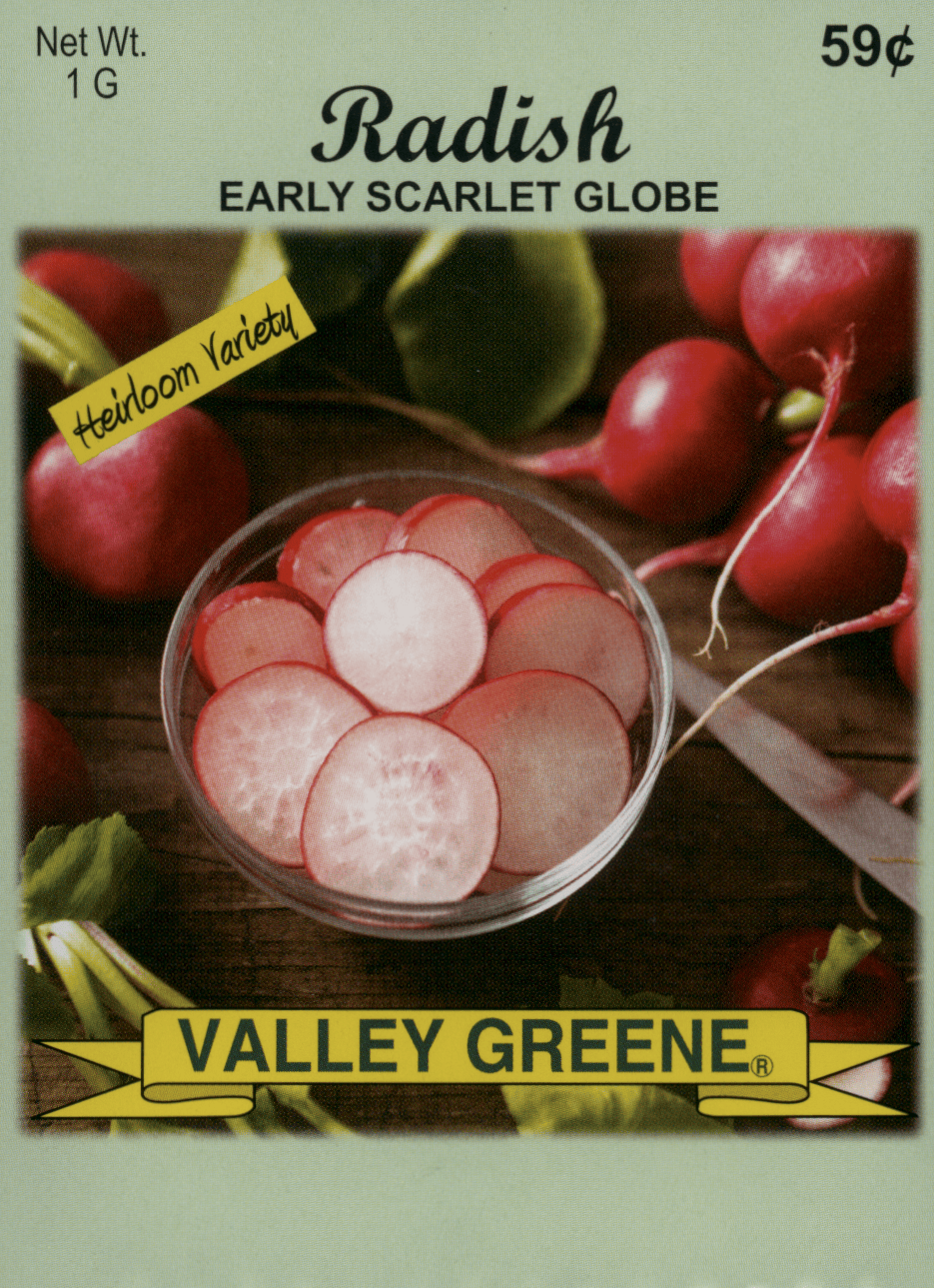
Description: Easy to grow and fast growing vegetable makes it ideal for children to grow. Scarlet ¾” (18 mm) globes, firm crisp white flesh grows large but not pithy, holds well and can stand cold. Excellent as a salad vegetable, eaten plain or as a garnish.
Culture: Sow spring and/or fall. Bred for upland and sandy soils. As with all root crops, thinning is most important.
Harvest: When roots are ½ “(1.25 cm) in diameter, overgrown roots become pithy and stringy.
| Planting Depth | Seed Spacing | Spacing Between Rows | Days to Germination | Spacing After Thinning | Days to Maturity |
| ¼” / 6 mm | ½ “-1” / 1.25-2.5 cm | 12” / 30 cm | 7-14 | 2” / 5 cm | 22-24 |
Nutrition: Source of vitamin C.
Back to Top
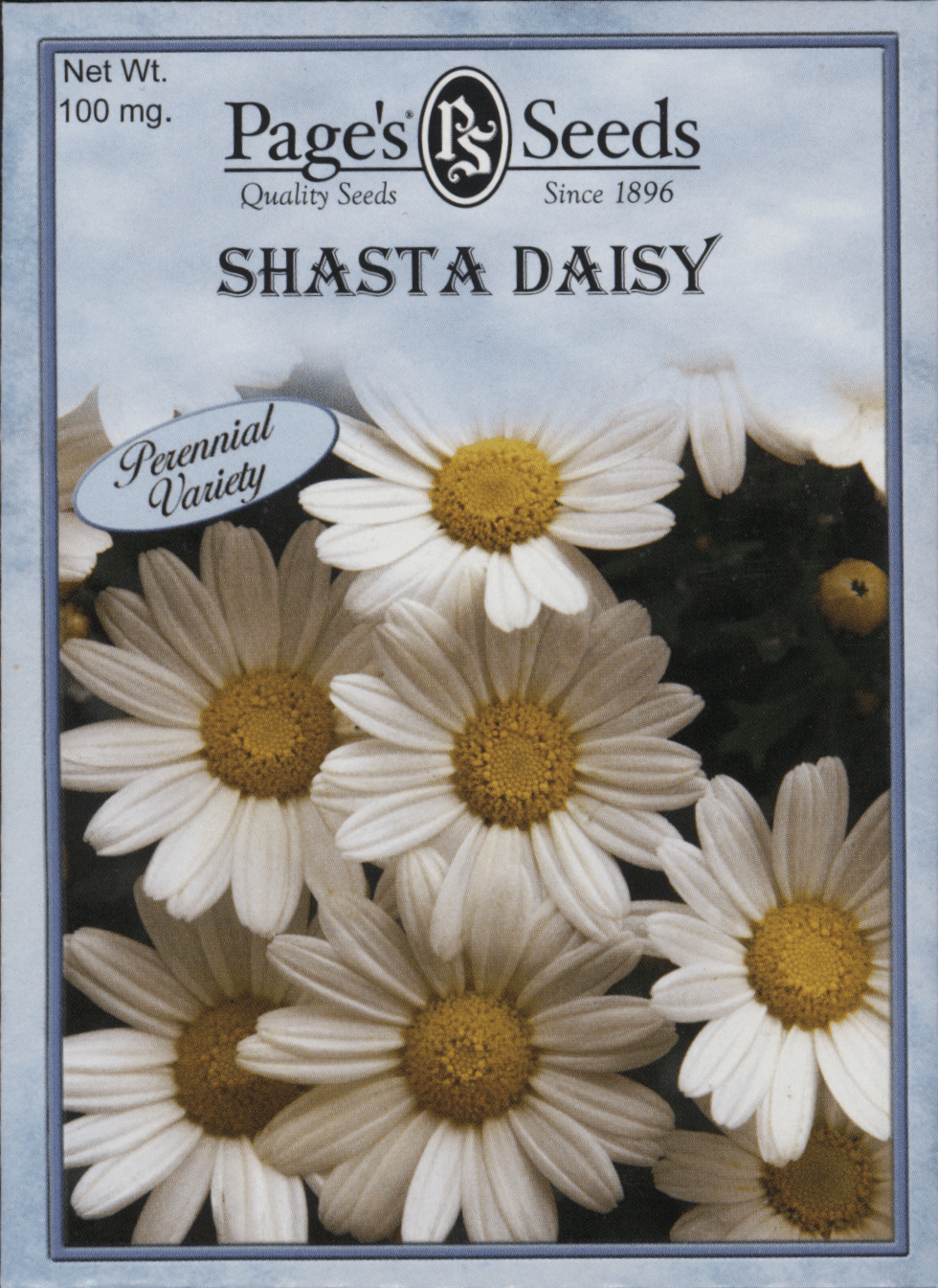
Description: Shastas are unrivaled for production of 2’-3’ tall strong-stemmed flowers during summer and early fall. The daisy-like flowers have snow-white petals surrounding a rich yellow center. Enjoy Shasta daisies in the garden and as cut flowers. Plants are easy-to-grow and nearly maintenance free.
Culture: For strong plants either start seeds indoors 8 to 10 weeks before last frost, or sow outdoors in late summer/fall and provide protection where necessary. Plant in well-drained soil. Fertilize when spring growth begins. Harvest flowers to prolong bloom period.
| Type | Height | Planting Depth | Spacing Between Rows | Days to Germination | Spacing After Thinning | Thinning Height |
| Perennial Perenne | 2” / 60 cm. | 1/8 “ / 3 mm. | 1” / 2.5 cm. | 12 | 12” / 30 cm. | 3” -4” / 7.5-10 cm. |
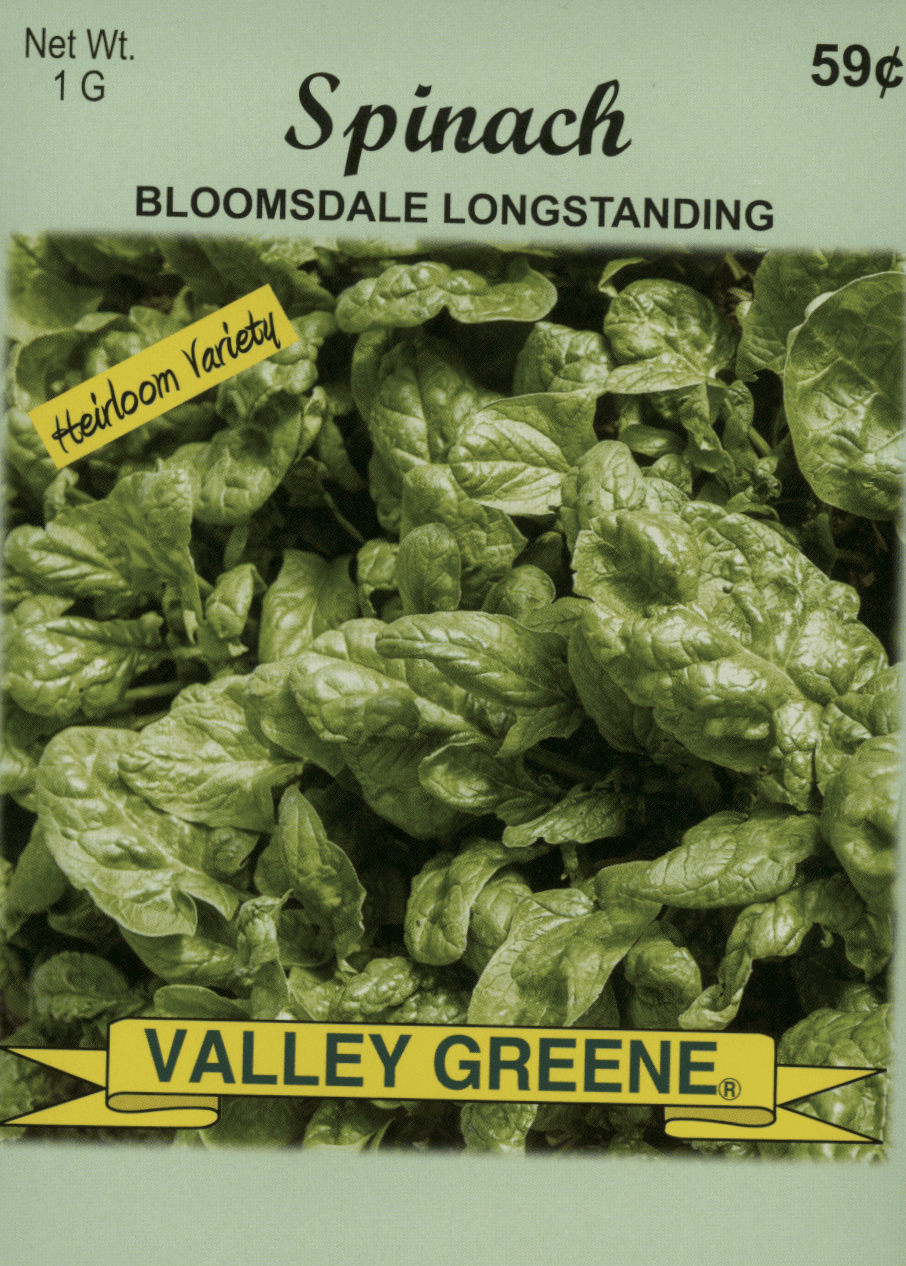
Description: This quick growing, heavy yielding, hardy spinach matures in about 48 days. Its longstanding ability before forming seed stalks makes it better for late spring or summer crops. The leaves are crumpled, very thick, deep glossy green, tender and highly blight resistant. Fine quality, very cold hardy.
Culture: Sow after all danger of frost has passed, or may be started indoors and produce a better crop if watered during dry weather.
Harvest: The tip of the shoots can be pinched out and used when about 3” (7.5 cm) long. Tender shoots and leaves may be eaten raw or cooked as you would any greens.
Nutrition: Fat and cholesterol free, low in calories. High in vitamins A, B, C and iron.
| Planting Depth | Seed Spacing | Spacing Between Rows | Days to Germination | Spacing After Thinning | Days to Maturity |
| ¾” / 18 mm | 1” / 2.5 cm | 12” / 30 cm | 7-14 | 4” / 10 cm | 48 |
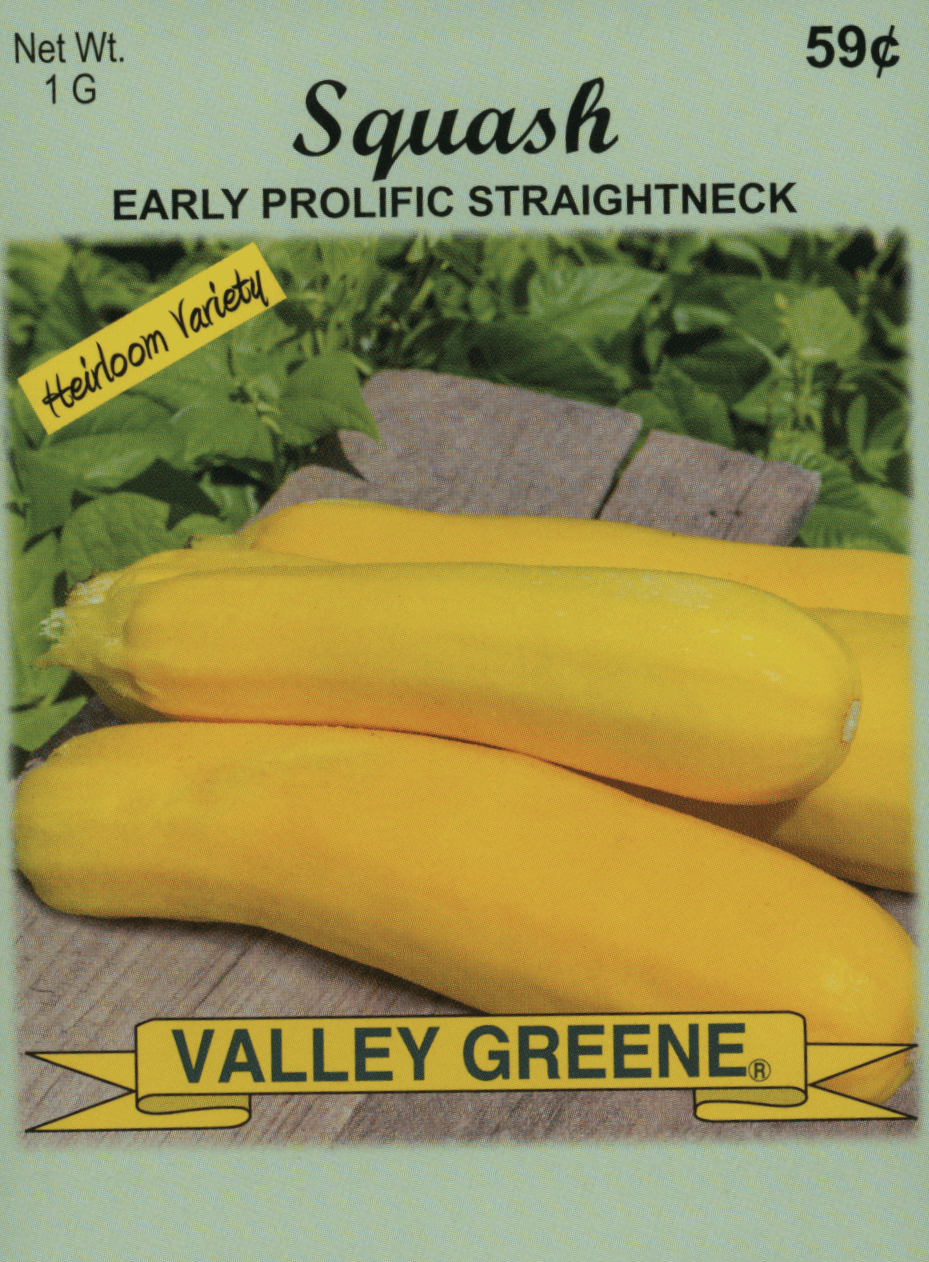
Description: A summer squash borne on bush vines, yielding fruits up to 14” long. Uniform lemon-yellow, lightly warted, club shaped fruit. Bush plants are vigorous and very productive. Firm fine grained thick flesh of excellent eating quality.
Culture: Requires very rich soil as squash is a voracious feeder. Sow 6-8 seeds in groups (hills) 3’-4’ apart. Thin to 2-3 plants per group. Water regularly from time of flowering until fruits ripen.
Harvest: Between 42-56 days, fruits are best between 4”-7” long. Very popular in the north because of early ripening
Nutrition: High in vitamin C.
| Planting Depth | Seed Per Group (Hill) | Spacing Between Seeds | Days to Germination | Spacing of Groups (Hills) | Thin to Plants Per Group (Hill) | Days to Maturity |
| 1” / 2.5 cm. | 6-8 | 3” / 7.5 cm. | 10-14 | 3’-4’ / 90-120 cm. | 2-3 | 42-56 |
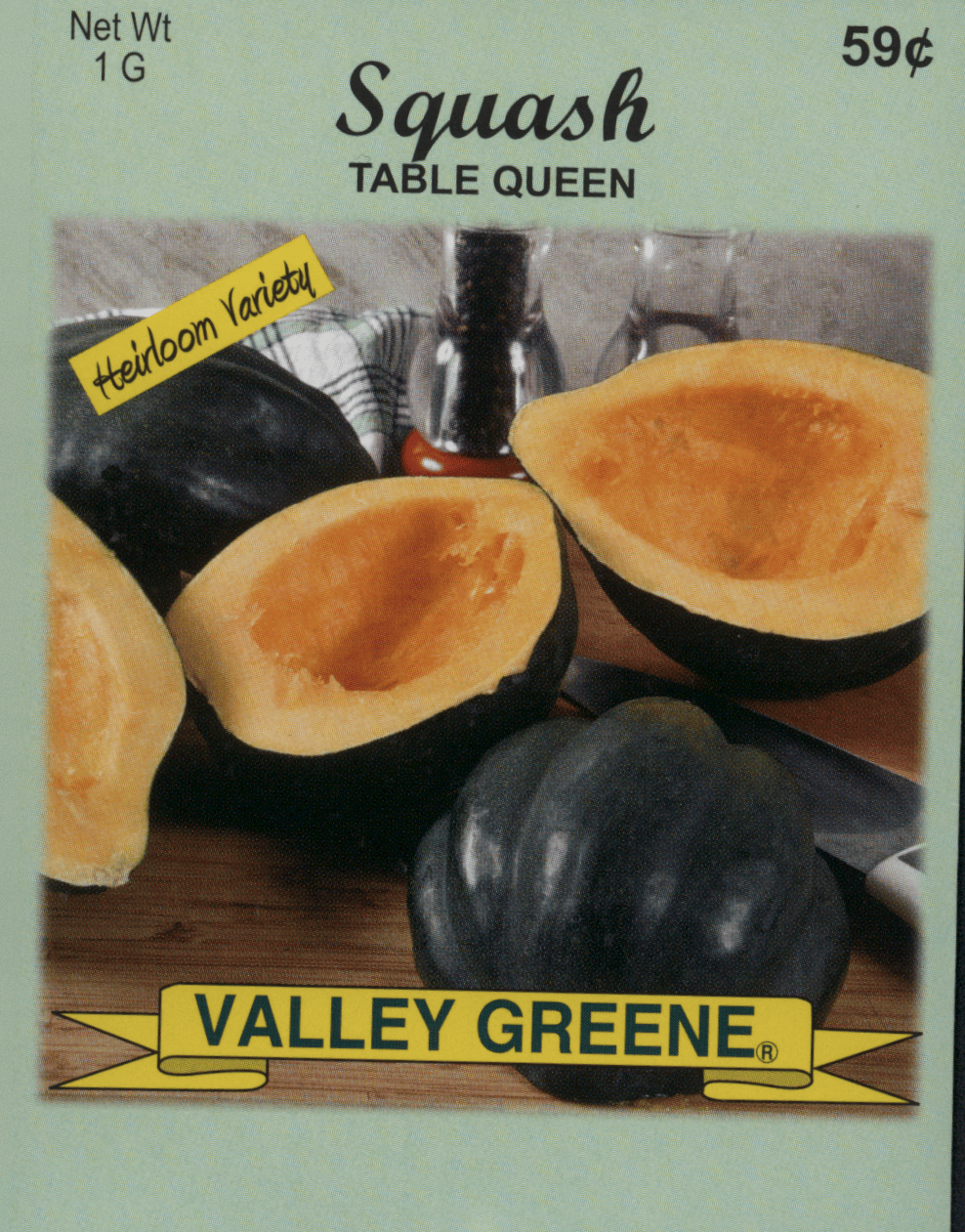
Description: This is one of the most popular of the winter or storage squashes. The fruits have dark green skin flecked with gray spots and grow to about 6” (15 cm) across. Weight averages 3-4lbs. (1-2 kg). The sweet, meaty flesh is yellow orange. Excellent baked or steamed.
Harvest: Shortly before fall frost, cut from plant, leaving a portion of stem attached. Skin should be dark green and firm.
Nutrition: Excellent source of fiber and vitamin A
| Planting Depth | Seed Per Group (Hill) | Spacing Between Seeds | Days to Germination | Spacing of Groups (Hills) | Thin to Plants Per Group (Hill) | Days to Maturity |
| 1” / 2.5 cm. | 6-8 | 3” / 7.5 cm. | 5-12 | 3’-4’ / 90-120 cm. | 2-3 | 58-90 |
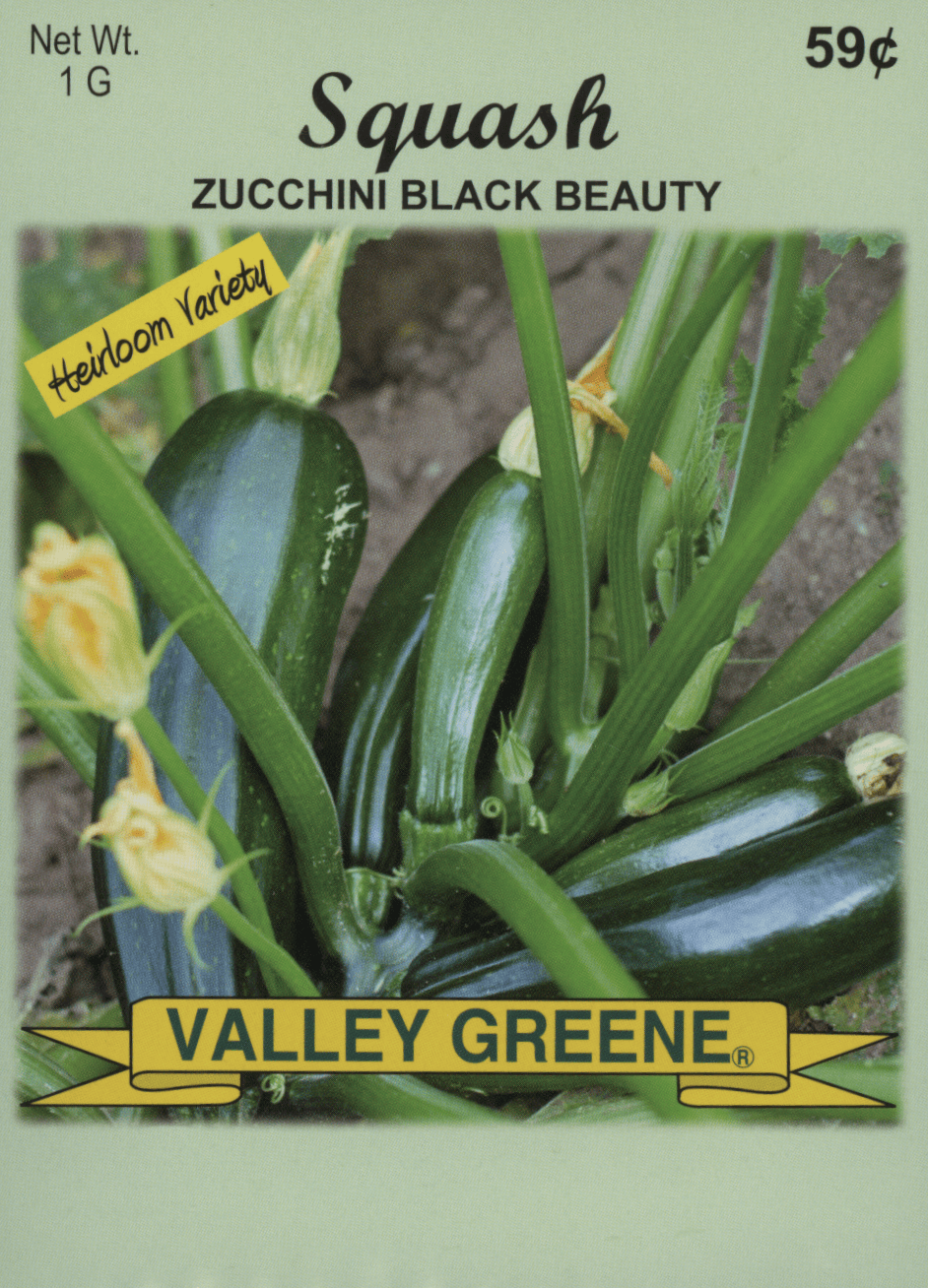
Description: A summer squash borne on dwarf bush vines, yielding a plentiful supply throughout the summer. Fruits are cylindrical, long, smooth, dark green-black; flesh greenish-white at eating stage and of good flavor.
Culture: Requires very rich soil as squash is a voracious feeder. Sow 6-8 seeds in groups (hills) 3’-4’ apart. Thin to 2-3 plants per group. Water regularly from time of flowering until fruits ripen.
Harvest: Between 50-60 days, yield is very good, keep plants picked which promotes more fruit. Best when picked young.
Suggestion: Cook with tomatoes and onions or by itself and smothered in tomato sauce. Can be used to make zucchini bread.
| Planting Depth | Seed per Group (Hill) | Spacing Between Seeds | Days to Germination | Spacing of Groups (Hills) | Thin to Plants Per Group (Hill) | Days to Maturity |
| ½ “-1” / 1.25-2.5 cm | 6-8 | 3” / 7.5 cm. | 10-14 | 3’-4’ / 90-120 cm. | 2-3 | 50-60 |
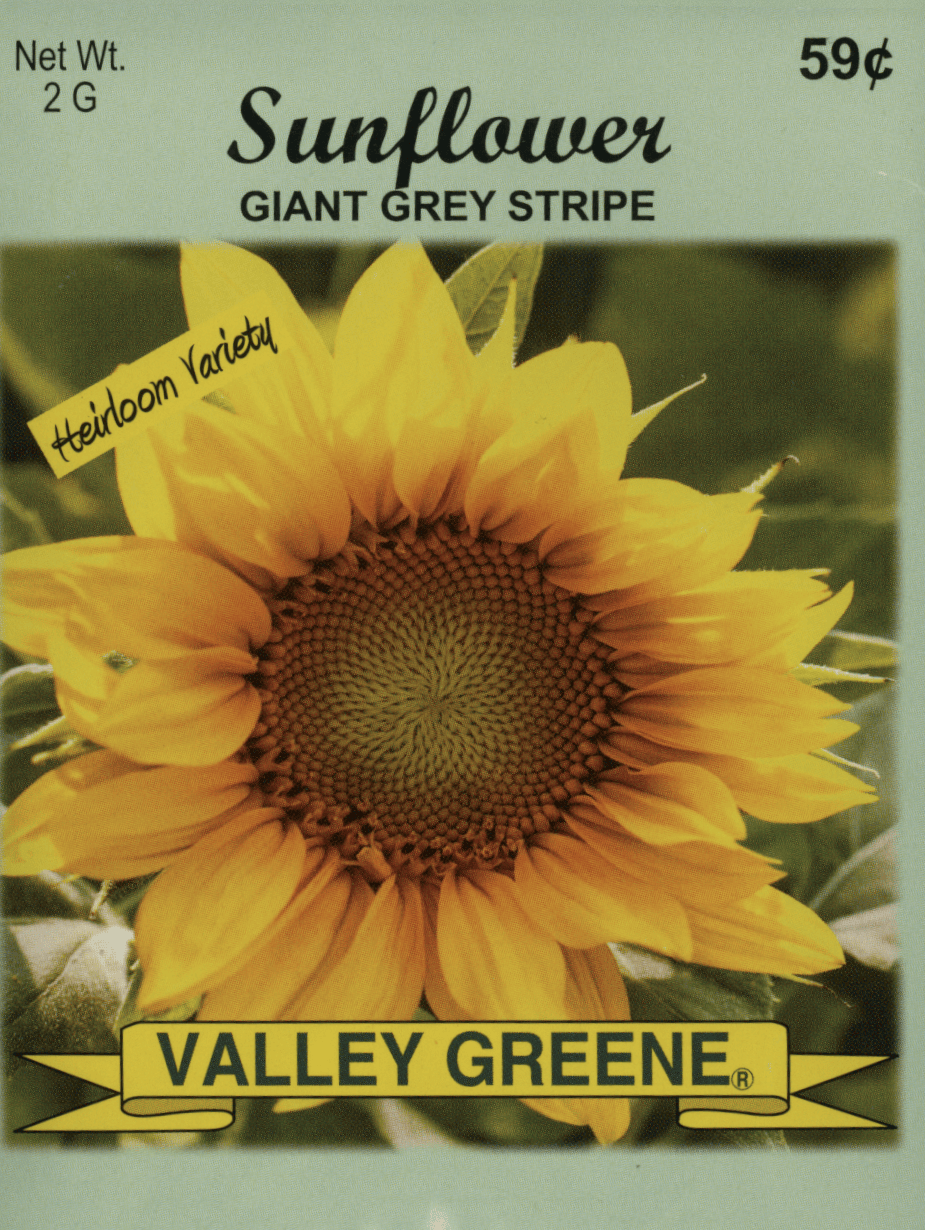
Description: Growing to 8’ (240 cm), this spectacular annual likes sunny locations. The blooms have large, round faces which follow the sun’s direction all day. The broad heavy flowers develop a large quantity of seed, and act as “living bird feeders”.
Culture: Plant these big seeds 6” apart in soil that is deeply dug. Thin to 2’ (60 cm) apart. The roots need plenty of space
| Type | Height | Planting Depth | Seed Spacing | Thinning Height | Days to Germination | Spacing After Thinning | Days to Maturity |
| Annual | 8’ / 240 cm. | ¼ “- ½ “ / 6-13 mm. | 6” / 15 cm. | 3” / 7.5 cm. | 10-14 | 2’ / 60 cm. | N/A |
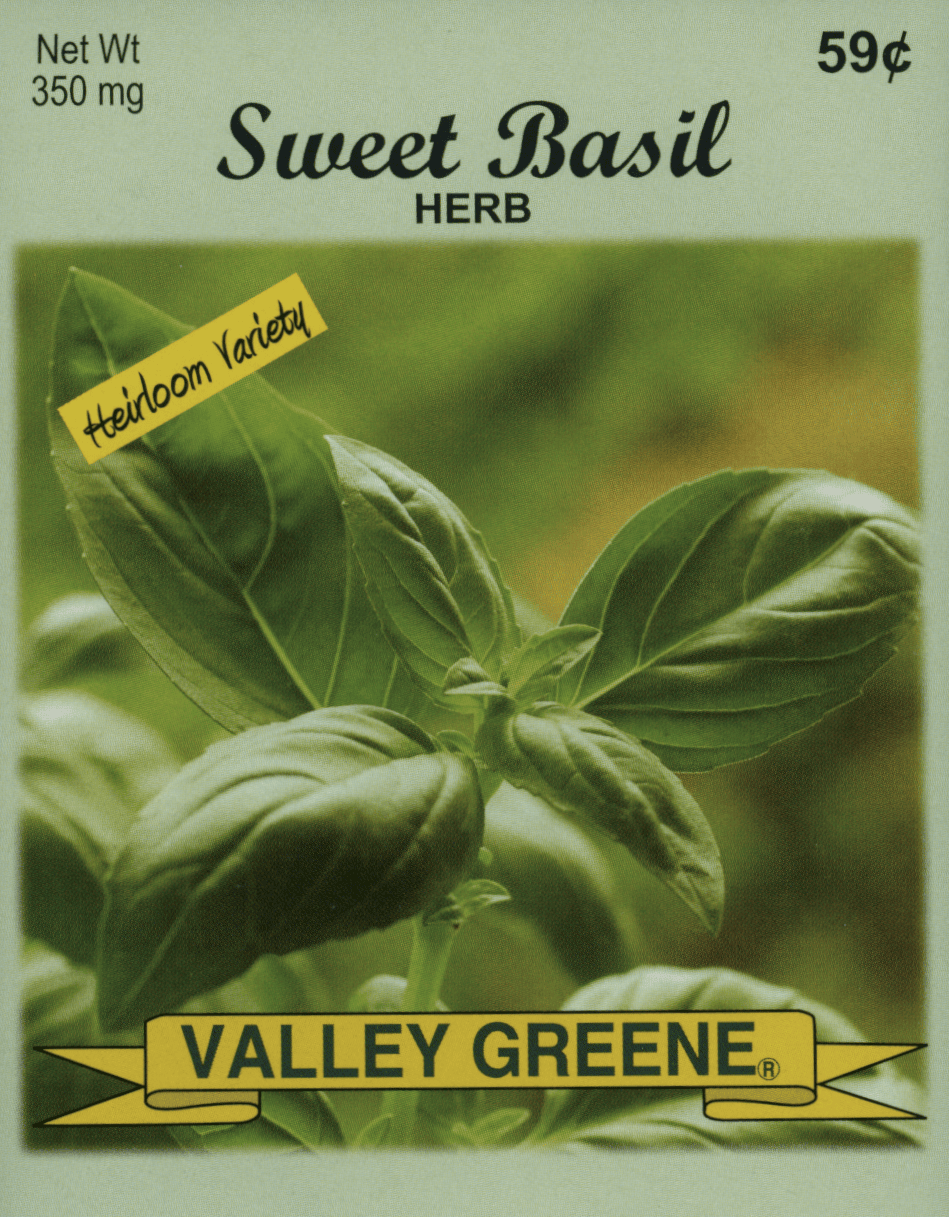
Description: Popular and easy to grow annual that develops into an attractive bushy plant 1 ½ ‘-2’ (46-60 cm) tall.
Growing: Plant in well drained soil. Avoid over watering. Excellent for growing indoors.
Harvest: Pick leaves when young, gather tops as flowers open.
Uses: Aromatic leaves have a spicy clover-like flavor when pulverized. Popular in tomato dishes, soups, stews, spaghetti, fish, poultry, and salads. Used in potpourri.
Preserving: Freeze leaves (coat with olive oil first) or dry them.
| Planting Depth | Seed Spacing | Spacing Between Rows | Days to Germination | Spacing After Thinning | Days to Maturity |
| ¼”/ 6mm | 1”/2.5cm | 18”/46 cm | 14-18 | 15”-18”/38-46 cm | 80-90 |
Description: Many consider freshly-harvested corn-on-the-cob, served piping hot, lightly seasoned, and dripping with butter to be the most delicious vegetable of all. Corn can also be frozen or canned.
Culture: Sow seeds directly in the garden in spring after soil has warmed. Does best in deeply cultivated soil that is high in nitrogen. To aid pollination, avoid planting in a single row. For succession, plant every three weeks until early summer.
Care: Be generous with water and fertilize when plants are 12”-18” (30-45 cm) tall.
Harvest: Pick when silks turn brown. Test by piercing a kernel with the thumbnail to see if it spurts a milky juice.
| Planting Depth | Seed Spacing | Spacing Between Rows | Days to Germination | Spacing After Thinning | Days to Maturity |
| 1”/ 2.5 cm | 4”-6”/ 10-15 cm | 30”-36”/ 76-90 cm | 5-10 | 12”/30 cm | 96 |
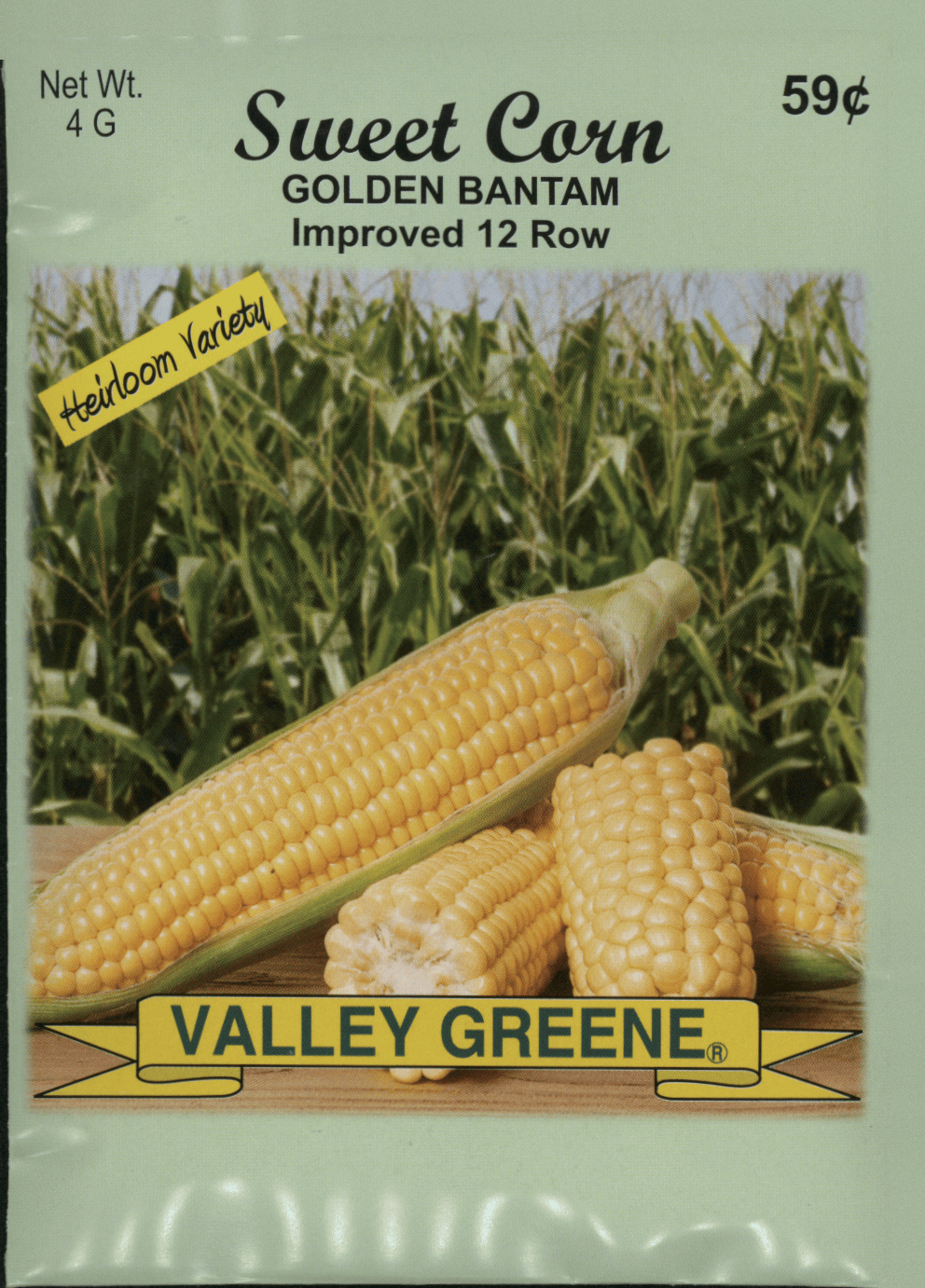
Description: One of the most popular vegetables, freshly-picked corn-on-the-cob is simply hard to beat for delicious flavor. Light yellow kernels are tasty and tender, and produced on vigorous, easy to grow plants. Stalks grow 6’-7’ (180- 210 cm) tall. Usually two ears 7 ½ “- 8 ½ “(18.75- 21.25 cm) long. Great for eating fresh, frozen, or canning.
Culture: Sow seeds directly in the garden in spring after soil has warmed. Does best in deeply cultivated soil that is high in nitrogen. To aid pollination, avoid planting in a single row. For succession, plant every three weeks until early summer.
Care: Be generous with water and fertilize when plants are 12”-18” (30-45 cm) tall.
Harvest: Pick when silks turn brown. Test by piercing a kernel with the thumbnail to see if it spurts a milky juice.
Nutrition: Good source of several vitamins and minerals.
| Planting Depth | Seed Spacing | Spacing Between Rows | Days to Germination | Spacing After Thinning | Days to Maturity |
| 1”/ 2.5 cm | 4”-6”/ 10-15 cm | 30”-36”/ 70-90 cm | 5-10 | 12”/50 cm | 75-80 |
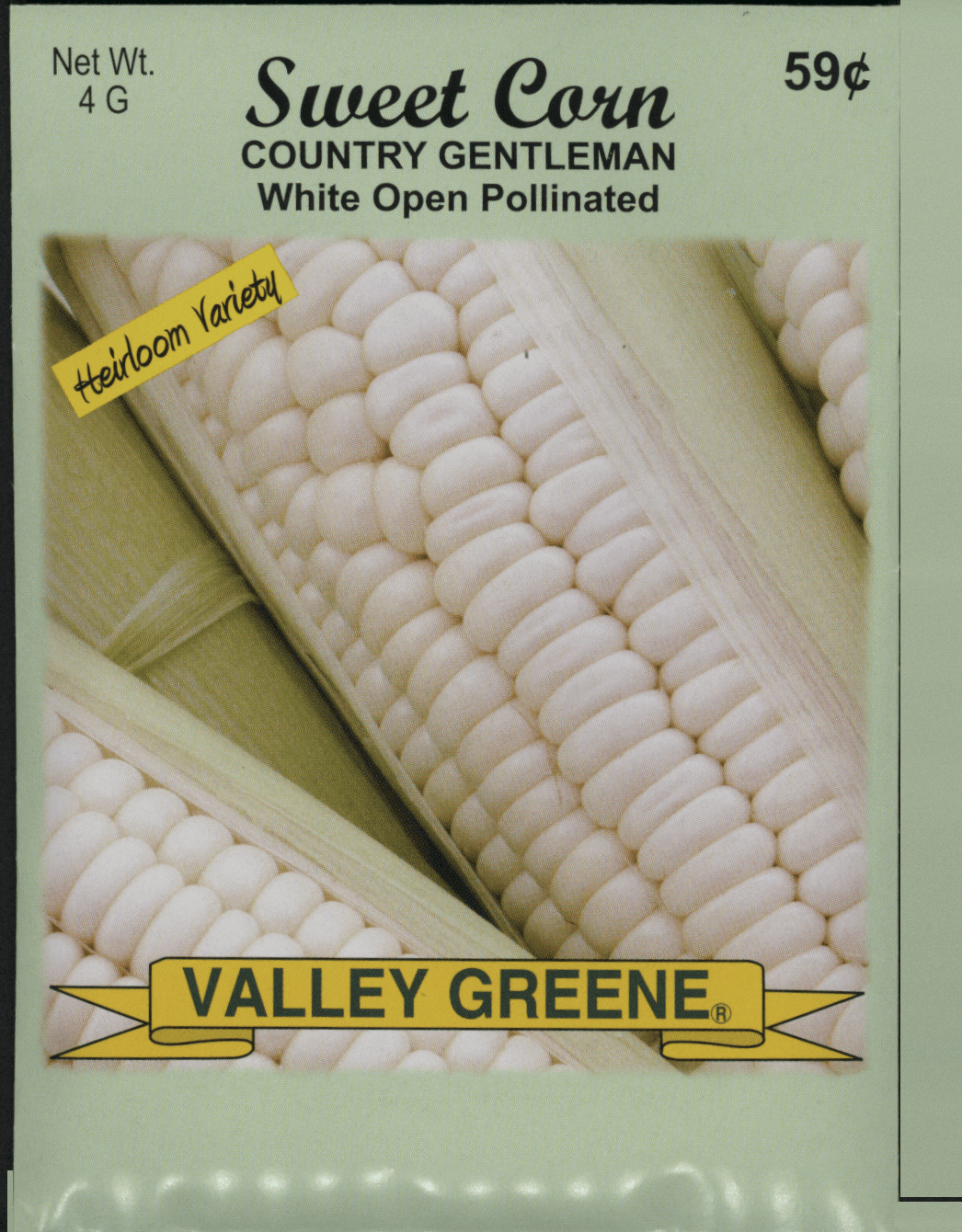
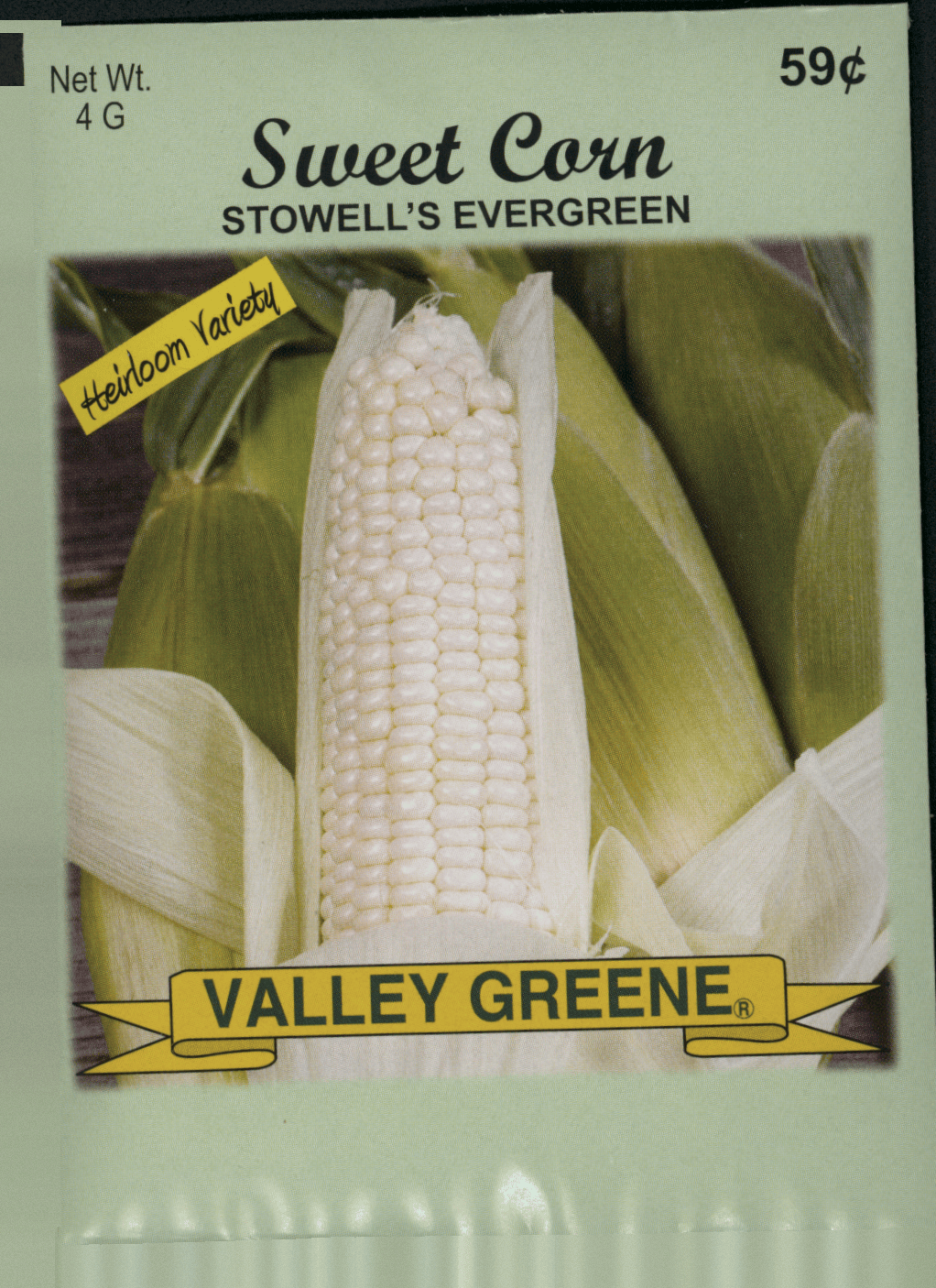
Description: Leading white variety for home garden and fresh market. Needs a full growing season. Tender ears are filled with sweet, juicy kernels right to the tip. Corn lovers should try this variety. 14-20 rows of clear-white kernels, 1 or 2 ears per 8’-10’ stalk. Holds quality long. Heirloom variety first introduced in 1848.
Culture: Sow seeds directly in the garden in spring after soil has warmed. Does best in deeply cultivated soil that is high in nitrogen. To aid pollination, avoid planting in a single row. For succession, plant every three weeks until early summer.
Care: Be generous with water and fertilize when plants are 12”-18” (30-45 cm) tall.
Harvest: Great for eating fresh, freezing and canning. Pick when silks turn brown. Test by piercing a kernel with the thumbnail to see if it spurts a milky juice.
Nutrition: Good source of several vitamins and minerals.
| Planting Depth | Seed Spacing | Spacing Between Rows | Days to Germination | Spacing After Thinning | Days to Maturity |
| 1” / 2.5 cm | 4”-6” / 10-15 cm | 30”-36” / 76-90 cm | 5-10 | 8”-12” / 20-30 cm | 80-100 |
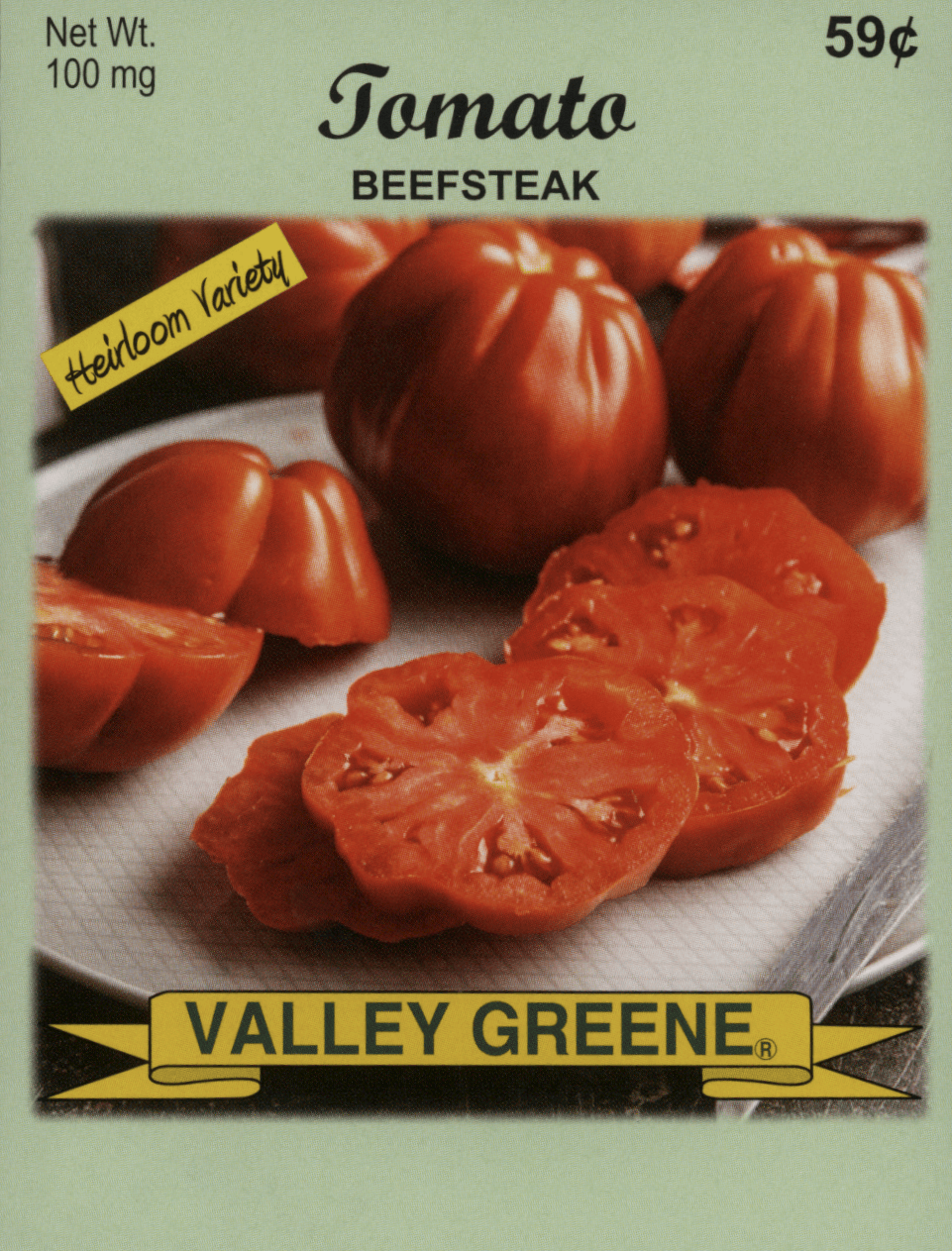
Description: color deep scarlet. Fruit very large, deep, flat and ribbed. Weight 9- 12oz., splendid for slicing and a mild flavor, plants are large and spreading, foliage broad and medium green in color. Mid to late variety.
Culture: use fertile, well drained and moisture retentive soil. Water well while plant is growing, less often after fruits set. Support plants by staking or use cages, keep fruit from ripening on the ground.
Harvest: Red, vine ripened.
Nutrition: High in vitamins A and C, a good source of potassium
| Planting Location | Planting Depth | Seed Spacing | Spacing Between Rows | Days to Germination | Spacing After Thinning | Days to Maturity |
| Indoors | ¼ ‘ / 6 mm. | ½ “ / 13 mm. | 2” -3” / 5-7.5 cm. | 8-14 | 3” / 7.5 cm. | 56-80 |
| Outdoors | ½ “ / 13 mm. | 6” / 15 cm. | 3’ -4’ / 90-120 cm. | 14-18 | 2’ -4’ / 60- 120cm. | 95-120 |
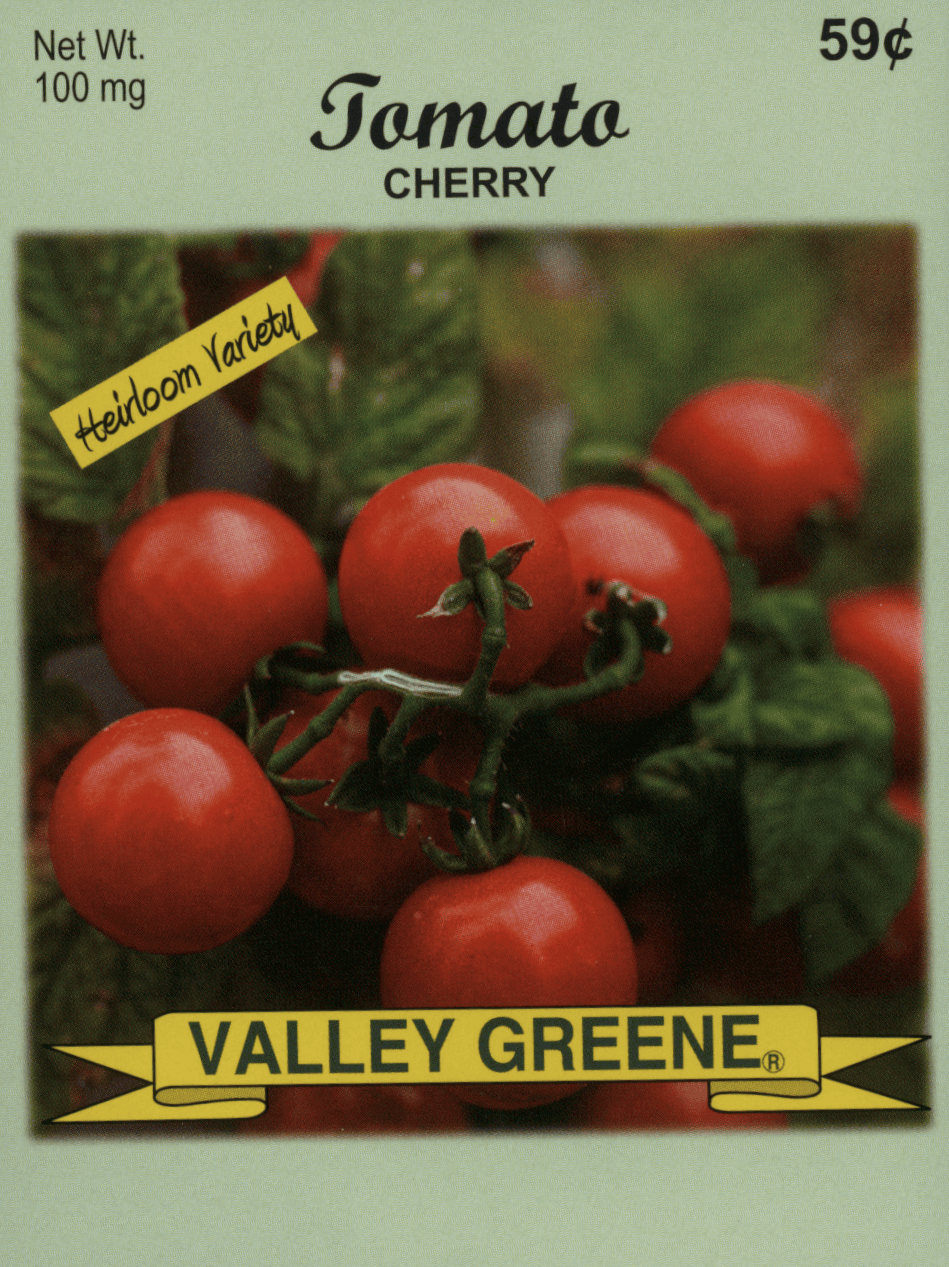
Description: This is the heirloom cherry variety that has been around for a century. The indeterminate vines are not as phenomenally heavy yielding as some of the new hybrids but yields are still good. Flavor is excellent, a bit of more acid than its modern counterparts and size is just right, that of a ping pong ball.
Culture: For earliest harvest, sow seeds indoors 6-8 weeks before the last frost, keeping soil temperature in the mid-70’s. Grow in full sun. Shift hardened transplants to garden shortly after last frost. Water regularly and fertilize when 6” (15 cm) tall and again in mid-summer. Stake or cage to save space.
Harvest: Pick carefully when richly colored and firm, but before fruit begins to soften.
Nutrition: Rich in calcium, iron, and vitamins A & C.
| Planting Location | Planting Depth | Seed Spacing | Spacing Between Rows | Days to Germination | Spacing After Thinning | Days to Maturity |
| Indoors | ¼ “ / 6mm. | ½ “ / 13 mm. | 2”-3” / 5-8 cm. | 14-18 | 3” / 8 cm. | 45-55 |
| Outdoors | ½ “ /13 mm. | 4” / 10 cm. | 3’ -4’ / 90- 120 cm. | 14-18 | 2’ -4’ / 60-120 cm. | 65-90 |
Description: One of the most popular general purpose tomatoes; good color, fine flavor and large fruit. Globular, slightly flattened smooth bright red, heavy walls and small cells. Vine is vigorous, heavy, and wilt resistant to a high degree. Medium late determinate variety.
Culture: Use fertile, well drained and moisture retentive soil. Water well while plant is growing, less often after fruits set. Support plants by staking or use cages, keep fruits from ripening on the ground.
Harvest: Red, vine ripened.
Nutrition: High in vitamins A & C and a good source of potassium.
| Planting location | Planting Depth | Seed Spacing | Spacing Between Rows | Days to Germination | Spacing After Thinning | Days to Maturity |
| Indoors | ¼” / 6mm. | ½” / 13 mm. | 2” -3” / 5-8 cm. | 8- 14 | 3” / 8 cm. | 65-80 |
| Outdoors | ½ “ / 13 mm. | 6” / 15 cm. | 3’ -4’ / 90- 122 cm. | 14- 18 | 2’ -4’ / 60- 122 cm. | 95- 120 |
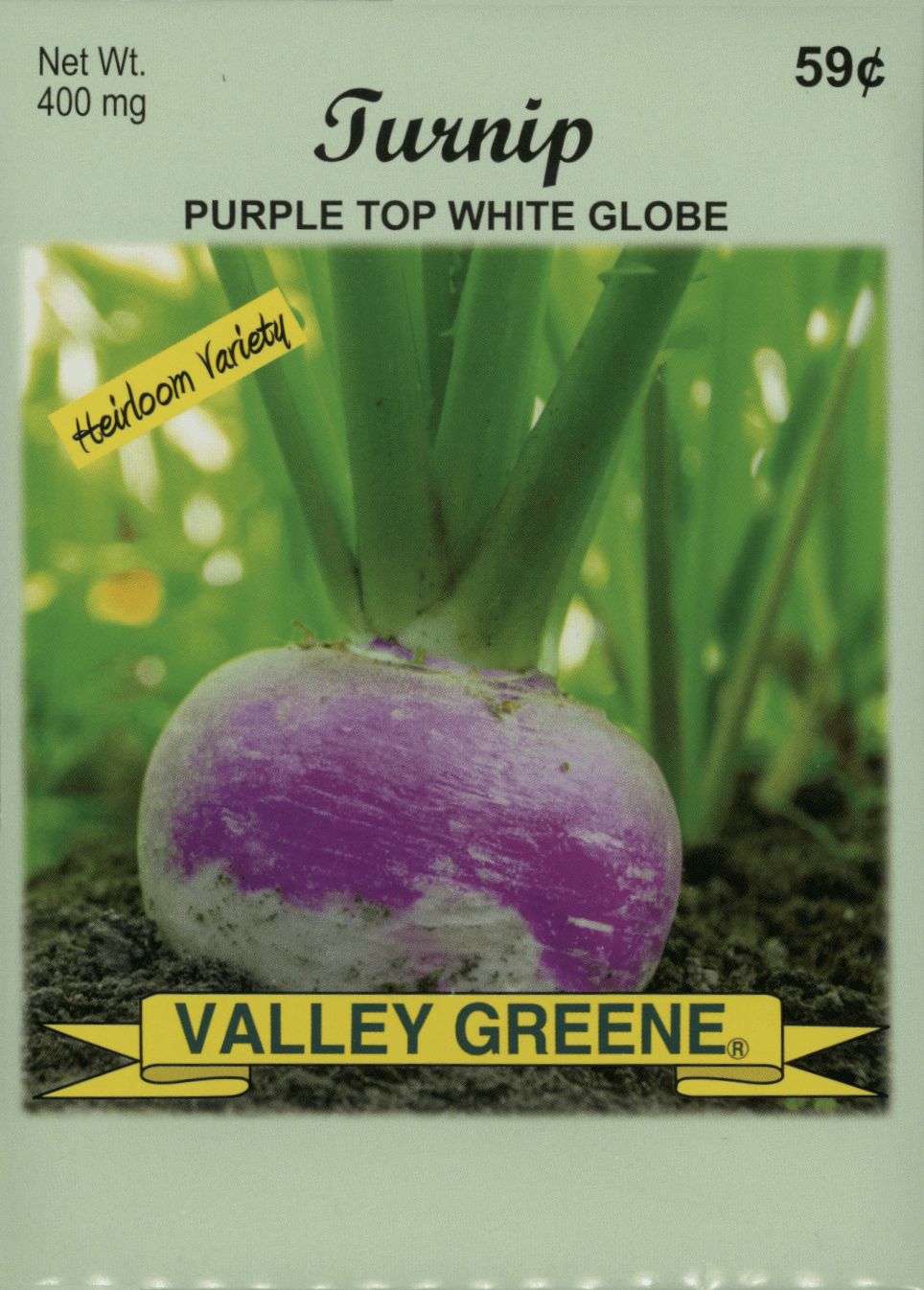
Description: This turnip variety is grown both for its mild-flavored, crisp roots and its greens. Roots are round and smooth with a purple shoulder and white beneath. Flavor is best in cool weather and when no more than about 3” (7.5 cm) across. Use roots raw in salads and dips, or cooked. Prepare greens by steaming.
Culture: For best flavor, time so plants develop during cool weather. Plants are frost tolerant. Direct seed in early spring (cover ¼ “) and again in late summer/early fall (cover ½ “). Water regularly and fertilize when 4” (10 cm) tall. Thinning is a must for all root crops. Try snipping the tops of unwanted plants as this action will not disturb the root turnips left to mature. Use Thinnings as greens.
Harvest: Pick tender leaves as needed. Pull roots between 2” -3” (5- 7.5 cm) diameter.
Nutrition: Greens are high in vitamin A and C. Roots supply some vitamin C.
| Planting Depth | Seed Spacing | Spacing Between Rows | Days to Germination | Spacing After Thinning | Days to Maturity |
| ¼ “- ½ “ / 6- 13 mm. | 1” / 2.5 cm. | 12” – 18” / 30-46 cm. | 5-10 | 2” -4” / 5- 10 cm. | 45-65 |
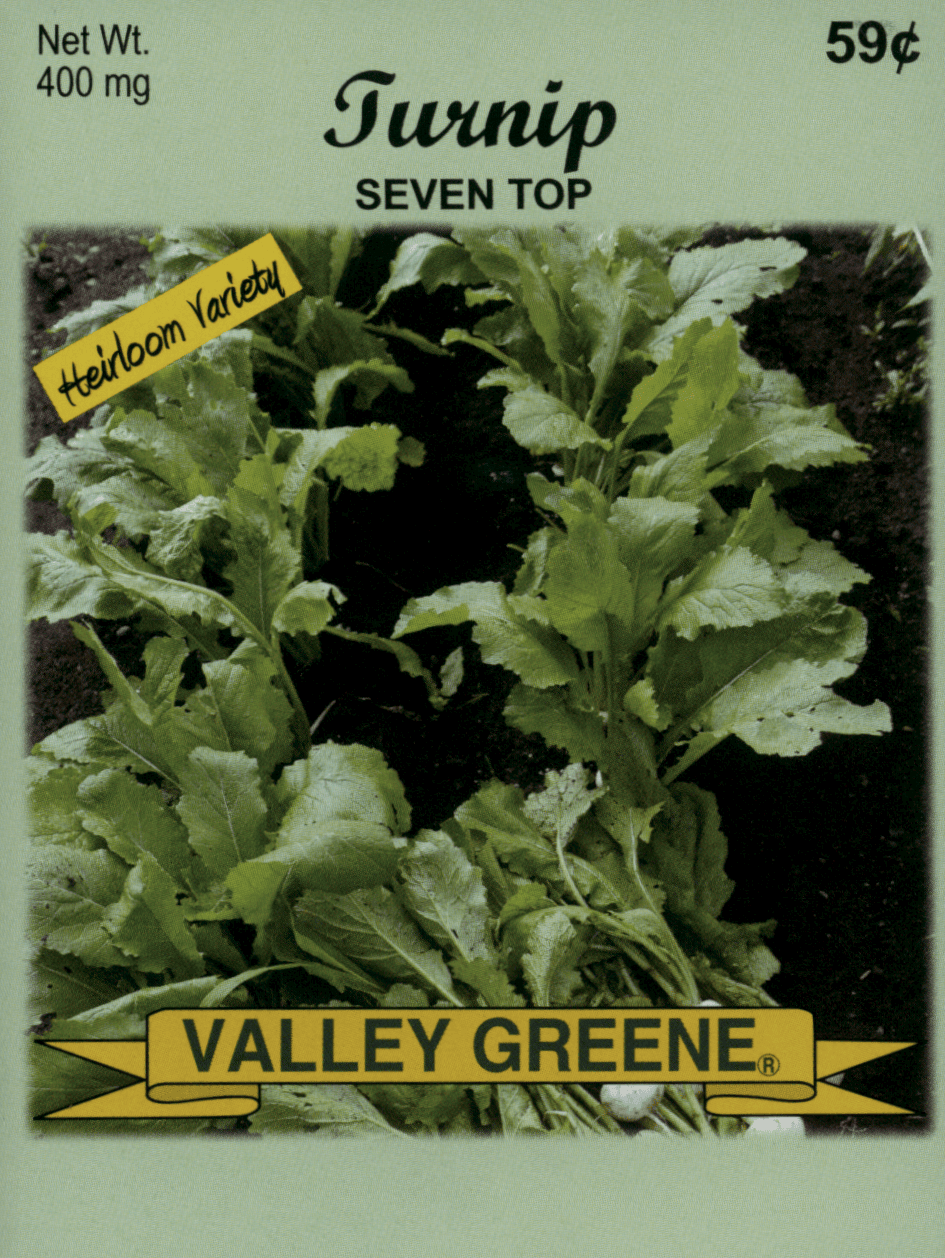
Description: Grown strictly for their tender, luscious vitamin rich greens. Plants are easy to grow and come to maturity quickly. Best flavor when grown in cool weather. Prepare by steaming or cooking with other vegetables.
Culture: Sow seed outdoors early spring and autumn. Plants are frost tolerant. Water regularly and fertilized when 4” (10 cm) tall.
Harvest: Leaves can be cut over a time period or all at once, from 40-50 days.
Nutrition: greens ae high in vitamin A and C.
| Planting Depth | Seed Spacing | Spacing Between Rows | Days to Germination | Spacing After Thinning | Days to Maturity |
| ¼ “- ½ “ / 6- 13 mm. | 1” / 2.5 cm. | 12” – 18” / 30-46 cm. | 5- 10 | 2” -4” / 5-10 cm. | 40 |
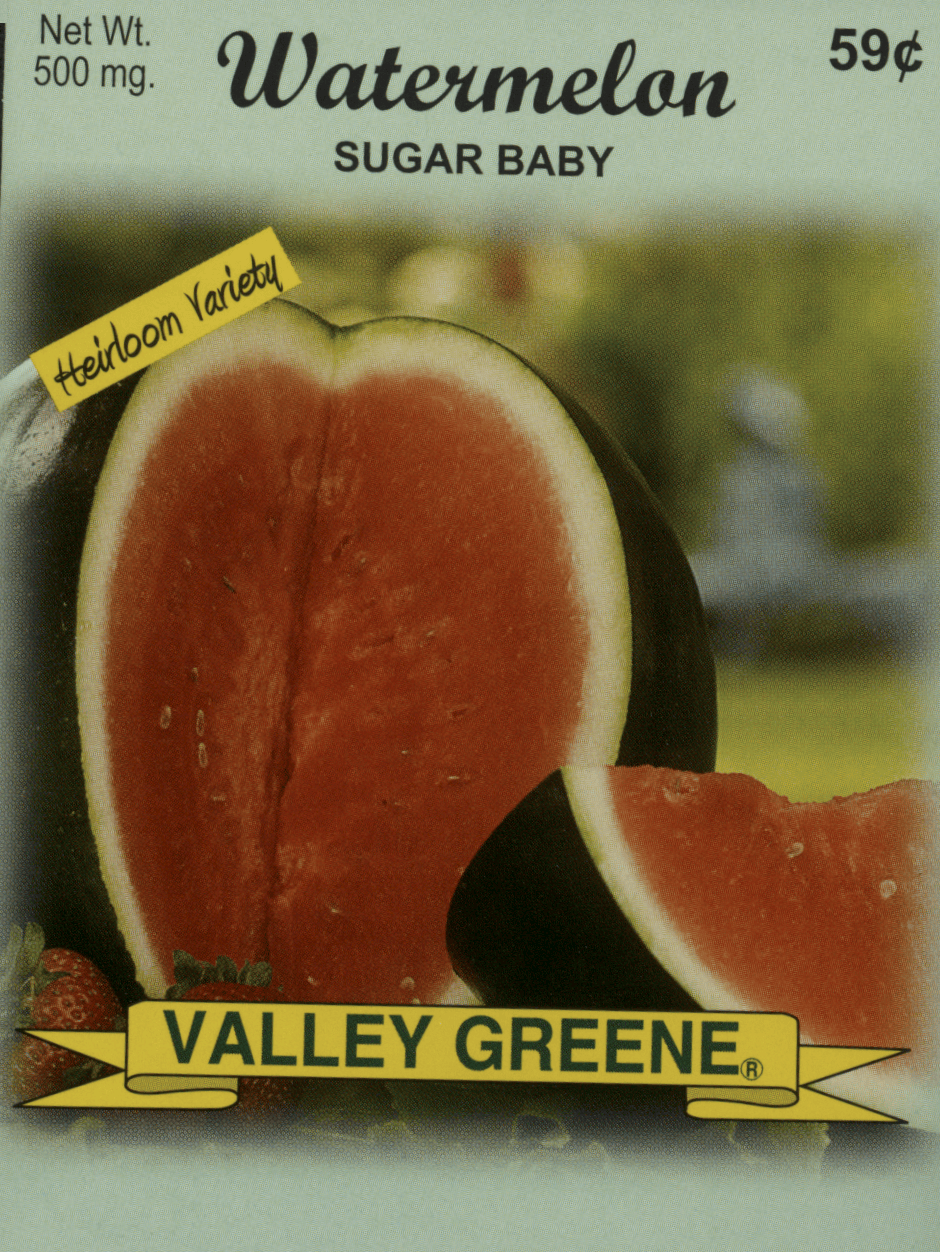
Description: This delicious, small fruited melon was developed especially for home gardens. Medium red flesh, sweet tasting, and not too seedy. Fruits grow 7”-8” (17.5-20 cm) across and weight about 10lbs. Dark green, thin, hard, tough rind.
Culture: Direct sow seed well after last frost date when soil has warmed. Usually sown in groups (hills) of 4-6 seeds and thinned to the 2 strongest plants per group. Can be started indoors four weeks earlier. Water regularly and fertilized when lateral runners begin to spread.
Harvest: When underside turns from white to yellowish. Also thump the melon, a dull, hollow sound indicates ripeness.
Nutrition: A good source of vitamins A & C.
| Planting Depth | Seed Spacing | Spacing Between Rows | Days to Germination | Spacing After Thinning | Days to Maturity |
| 1” / 2.5 cm. | 3” / 7.5 cm. | 3’ / 90 cm. | 8- 10 | 2’ / 60 cm. | 75-80 |
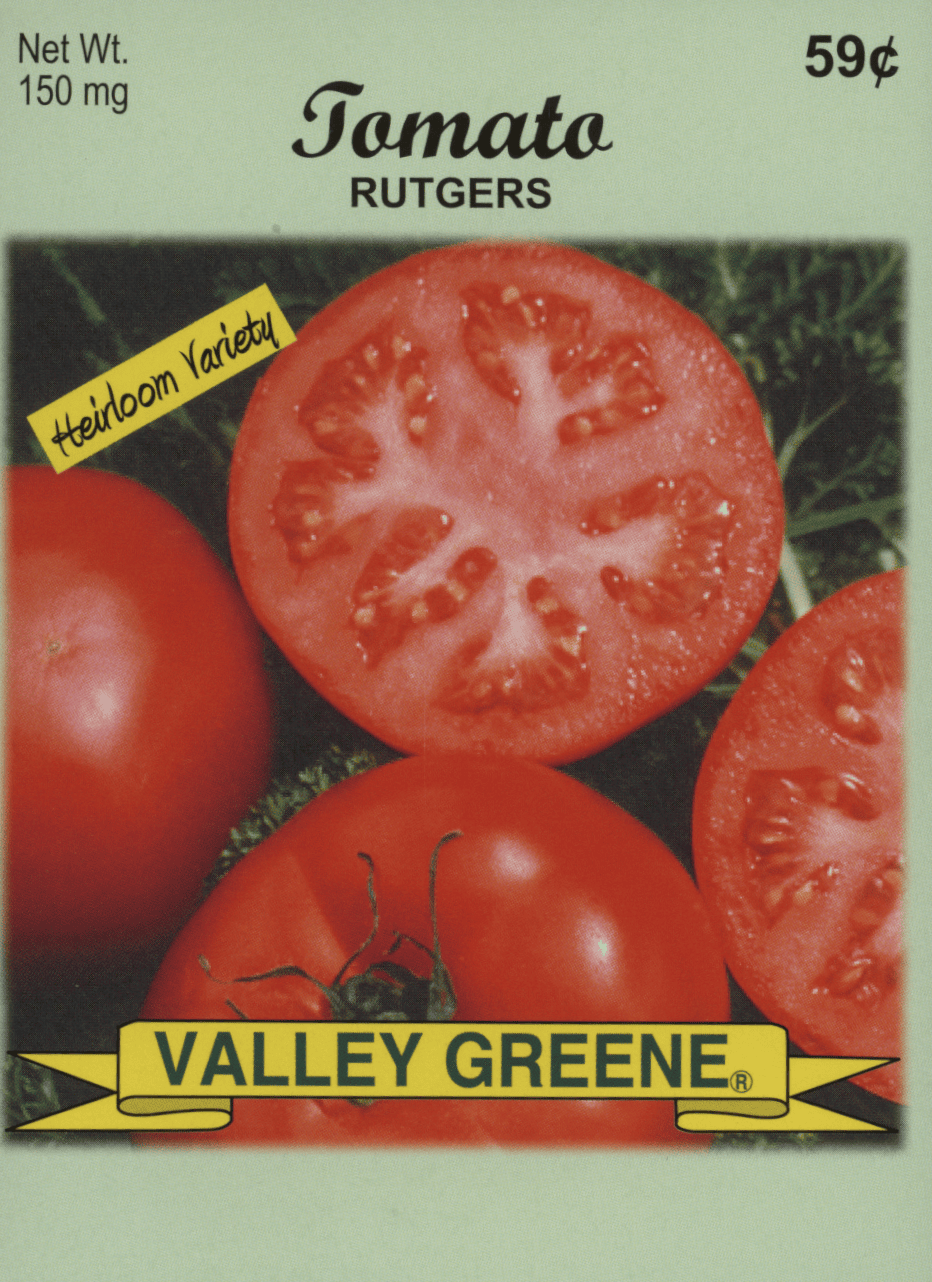
Description: Tender, delicious, and prolific! Best flavor if picked when smaller.
Culture: After danger of frost has passed, plant seeds 1 inch deep and 24 inches apart in hills or rows. Can be grown in containers.
Harvest: 1.5 months
| Planting Depth | Seed Spacing | Spacing Between Rows | Days to Germination | Spacing After Thinning | Days to Maturity |
| 1 inch | 24 inch | 24 inch | 1.5 months |